| A New Documentary Explores Longevity
| When documentarian David Donnelly toured the Buck Institute in Marin County, Cal., he became fascinated by their biomedical research into aging. “I went immediately from skeptic to … it was so impressive,” he says, searching for the right words. “And they were very pragmatic. These people weren’t saying that we’re going to live forever… They were saying, ‘This is the work that we’re doing to give you more quality years with the people that you love and to try to reduce pain and suffering in the world’.”
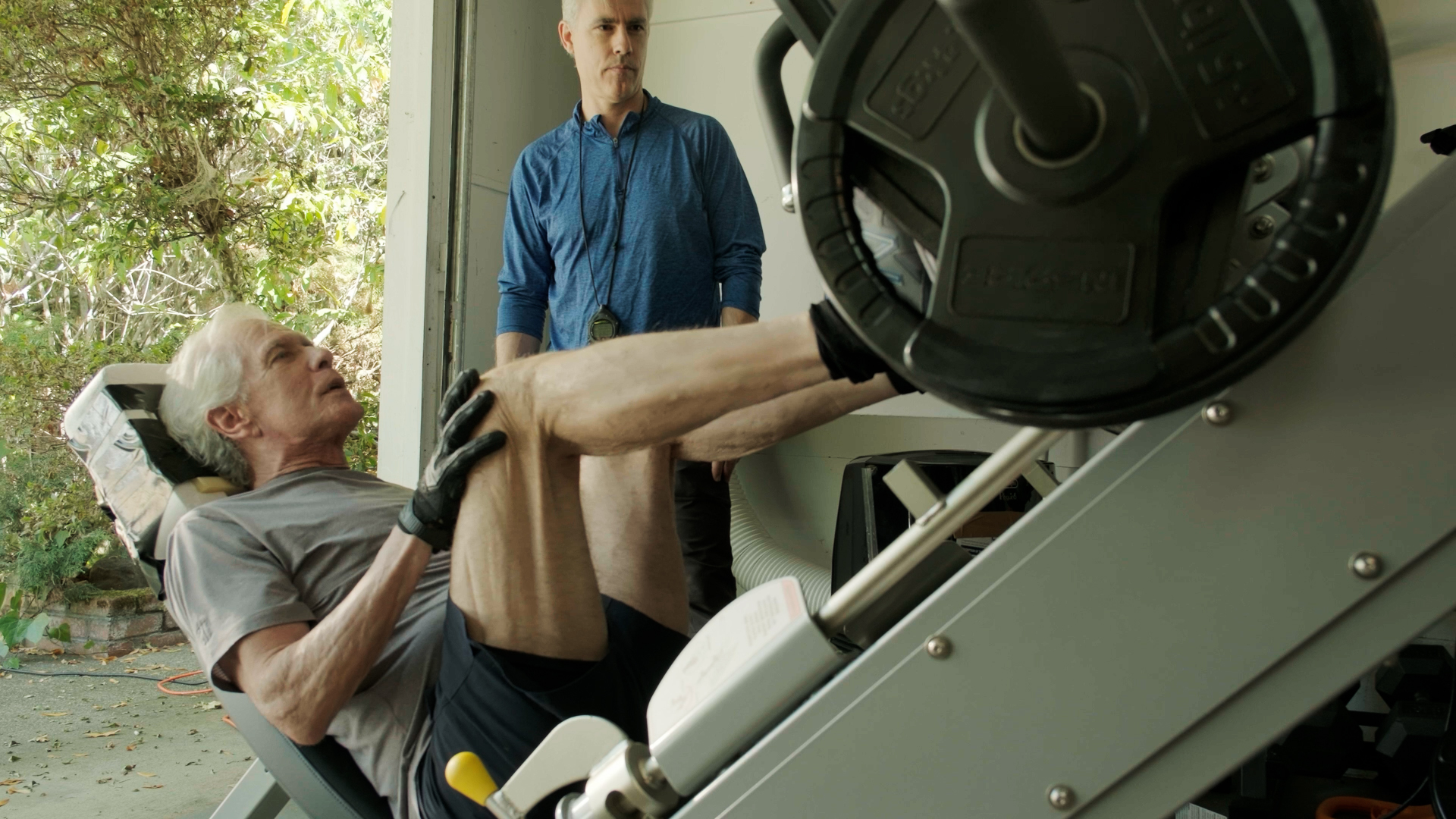
This visit led to the creation of Forever Young, which surveys the frontiers of medical science and stares the future in the face. It’s a dissonant picture, forward looking but with dystopian hints along the way. The lessons that viewers take away from it might depend on their views of scientific research and their place in society.
Support independent journalism on aging
Scientific Reality Check
“If cancer were magically cured today, human life expectancy would increase by about two years,” observes Thomas Lewis, a psychiatrist and producer of the documentary. “Maybe three years at most.”
“Age,” he says, “is not some disease that happens to us like malaria or polio that we can cure. It’s part of the human condition.”
Nor does everything to do with staying alive require the latest scientific research, Donnelly acknowledges, noting, “Falls kill more people in the United States than cancer. It’s preventable. People just don’t take it as a serious threat. These are the things we can do to increase American life expectancy and global life expectancy that have nothing to do with science.”
While research at the Buck Institute and elsewhere is the star of this movie, Donnelly also wants to keep the context in mind. “The research is not going to stop,” he says. Fueled by AI, that’s going to continue to progress. Eventually it will reach more and more people as well, not just the ultra wealthy. “That’s one of the reasons we made the film, to get the fundamentals out there in a way that’s easily digestible to people.”

Social Studies
Longevity is a growing commodity, but it is not evenly distributed. In the words of Diane Ty, Managing Director of the Milken Institute’s Center for the Future of Aging, “We’ve become a very bifurcated country across every aspect of our society. Who gets to age well follows the same pattern and has the same structural barriers that we see elsewhere.”
The care economy exemplifies this bifurcation. “It just becomes a math problem,” Donnelly says. “There aren’t enough younger people to take care of the aging populations. You’re already starting to see the consequences.”
Aging goes beyond physical well-being, and Forever Young stresses quality-of-life issues, quoting psychiatrist Sarah Centeno that relationships are a critical vital sign.
“Being alone and being isolated elevates all kinds of stress markers,” explains Lewis. “As social mammals, we regulate each other’s physiology.”
Lewis describes care and compassion as functions that go back millions of years, to the origins of mammals — which is part of why he’s skeptical that technology can substitute for them. “Getting a machine to react,” he says, “I don’t think that can be done. I’m very skeptical.”

The Human Touch
Donnelly describes a typical visit to the doctor’s office: “They weigh you; they take your blood pressure. They ask, ‘Are you smoking? Do you work out?’ But they don’t ask about the status of your relationships.” He acknowledges that such a line of questioning would add a considerable burden to the daily life of everyday doctors. Shifting the analogy to another profession, he says, “We have this culture of this obsession with our portfolios and growth, but what if we started to also apply the same philosophy to our relationships? To where we have to invest in our relationships at a young age?”
He continues: “We have the highest rates of anxiety and depression and loneliness ever recorded. And so if we don’t start dealing with those questions, which science cannot solve, then what do we have? We have a lot of people that are living longer that are living more miserable lives.”
For Lewis, Forever Young captures a shift in the future of life on Earth. “The change in people’s own conception of their life story and what it means to be the protagonist in their life story,” he says, “is quite a bit different if you think the story is going to go on to 90 or 100 than if you think it ends somewhere around 70.”
Leave a Reply