| Older adults stand to gain the most—if it’s real.
| Karen Fischer
| In my mid-twenties, I took a year off from work to drive throughout the country and camp in various national parks. I hiked, read, and wrote, trying to figure out what I was going to do with my life.
As the months went by, a new awareness poked at me in unfamiliar landscapes, from Texas to Washington. Whenever I went, I admired the plants, trees, and flowers around me, but all of these concrete things only held meaning if I knew their names.
There was no explaining the myriad of cacti in the Sonoran desert if I couldn’t distinguish between cholla, barrel, and teddy bear, but once a plant had a name, a whole world of delineation could then open up. Without a name, the study of these things using my own limited vocabulary was increasingly difficult, and nearly impossible.
Putting a name to a thing brings it to life, and establishes that it is indeed real. But what if the thing is contested, yet still named? What happens when very intelligent people name things that may not even exist?
Support independent journalism on aging
Enter glymphatics.
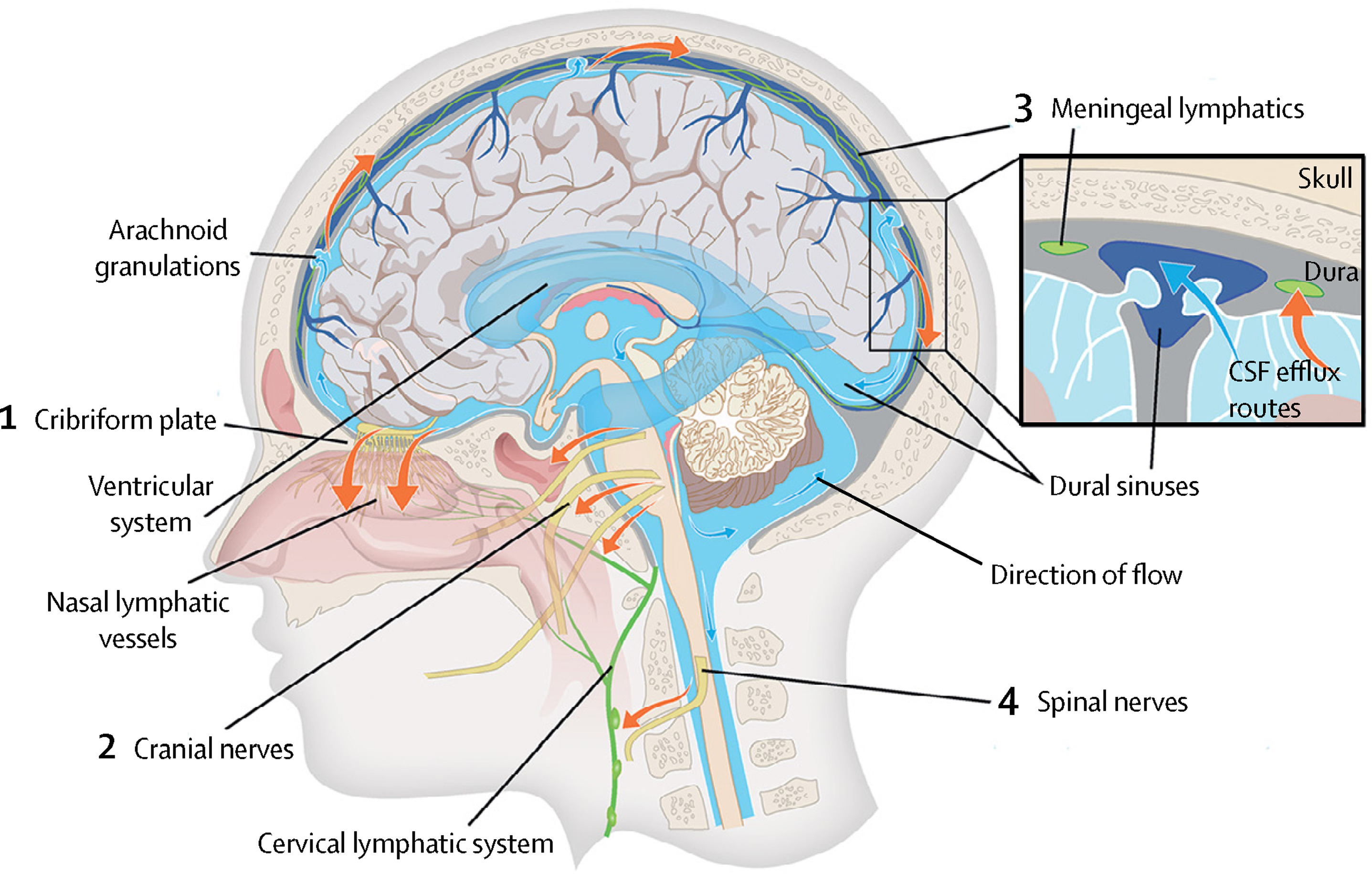
First coined in 2012 by Danish neuroscientist Maiken Nedergaard, glymphatics is a field of study focused on the ways in which cerebrospinal fluid (CSF) flows into the brain and drains during sleep to clean it, like a car wash. Glymphatics, advocates argue, can explain the progression of neurodegenerative diseases, such as dementia, Alzheimer’s, and Parkinson’s disease.
“We’re in a situation […] where there are scientists who believe that the glymphatic system explains everything about fluid flow, and those who don’t even think the word should exist,” explained Emily Sohn, an independent journalist at the Association of Health Care Journalists (AHCJ) conference in May, where she moderated a panel on glymphatics after her own seminal reporting on the field in The Transmitter.
The concept of glymphatics has immense implications for older people around the world. In the United States alone, over one million people are living with Parkinson’s disease, and six million are living with various types of dementia. Women run a 19 to 23 percent risk of developing dementia in their lifetime. In 2026, it cost $409 billion in health care expenses to care for dementia patients alone, and in 2025, $446 billion worth of unpaid caregiving was spent caring for these patients. When added all together, those costs fall just short of the national military budget.
All of the individuals suffering from these diseases and caring for those who do is what underpins the true hope within glymphatics. If there is a real connection between CSF and the development of neurodegenerative diseases, prevention and treatment could be within reach.

Here’s what to know about where glymphatics sector came from, and the central debates among scientists to determine how the field should move forward.
Experimental Ground Zero
Glymphatics began with an anesthetized mouse. Scientists removed a small piece of the mouse’s skull and replaced it with a glass window to peer into the living brain while it dozed off. They then injected a green dye into the mouse’s cerebrospinal fluid and watched as that fluid flowed into the brain. Researchers found that the CSF flow cleared out amyloid beta, a key protein waste associated with Alzheimer’s disease.
“The collaborators [then] made lots of really big claims,” explained Jeff Tithof, an Assistant Professor at the University of Minnesota who studies fluid mechanics. Some of those claims included that amyloid beta accumulation could actually lead to Alzheimer’s or Parkinson’s, and that CSF flow played a role in injury after a stroke.
But once scientists started trying to try to reproduce the initial experiments or follow up with their own, they saw different results, and in some cases couldn’t replicate initial findings, said Patrick Drew, a professor at Pennsylvania State University who studies how CSF and blood flow contribute to neurodegenerative diseases.
“We were disagreeing, [like], ‘I’m not seeing the same thing you’re seeing,” Drew said.
Nevertheless, since the fateful mouse experiment in 2012, the field of glymphatics has exploded. Back then, there were fewer than 20 medical publications that mentioned the word “glymphatic.” By 2025, there were over 850.
“It’s either you believe in it, and it’s your world view, or you don’t,” said Sohn of her reporting with neuroscientists.

The Path for Innovation
With glymphatics, how one sees the world around them is paramount. There is a degree of human pride and ego that inevitably shapes breakthroughs, and friction between scientific factions has long spurred research that ends up being positive for all. For example, French chemist Louis Pasteur famously butted heads with German chemist Justus von Liebig over the origins and intrinsic processes of fermentation and enzymes. Neither of them were right initially, but their feud powered more research and inquiry into these topics that laid the groundwork for chemistry today.
As the interest and study of glymphatics grows, some of the roadblocks are technological. There are limitations to the equipment that neuroscientists can use to peer deep into the brain with high resolution. It’s only when those tools are available that scientists can definitively study these deep, internal systems and how the human brain impacts the body. That push for more technological innovation is positive, Tithof said, to either confirm or deny whether this brain system actually does what the initial researchers claimed.
“I think that science really needs trailblazers who challenge the status quo,” he said.
In the meantime, students continue to pursue glymphatics. Research will continue to be conducted, yet there is a strong possibility that this grand hypothesis made in 2012 may not amount to much. A massive amount of time, energy, and money could be wasted to improve the lives of those with neurodegenerative diseases… Alternatively, a breakthrough could also come, proving the skeptics wrong.
Is the possibility worth the risk? The answer, for now, is yes.

Karen Fischer is an independent writer and reporter. Her work has appeared in such publications as CQ Researcher, Prism Reports, Eater, The Verge, and Business Insider, among others. She also produces The Gumbo Pot, a weekly Substack featuring independent reportage on education, health, culture, food, infrastructure, and energy.
Leave a Reply