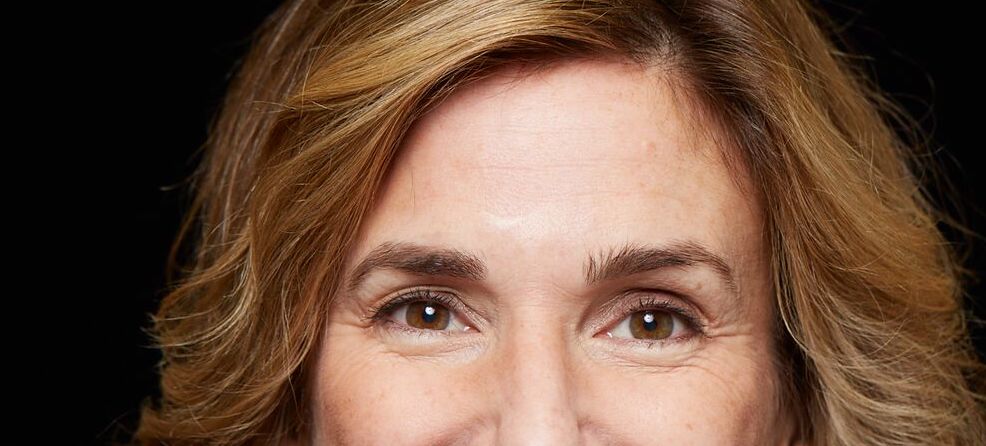
| Alexandra Drane Explains How
| The co-founder and CEO of ARCHANGELS, is on a mission to make us all see ourselves as caregivers. Alexandra Drane’s company helps organizations measure, match, and act on that data to reduce costs and increase wellbeing.
“I think often when people think about caregiving,” she explains, “they put it into the box of you’re caring for a baby or you’re caring for an elder. And in so doing, they lose the opportunity for themselves and for the world to see that it actually happens at every age, in every stage.”

The serial entrepreneur notes that more than 40% of adults across the country are in a caregiving role — and among them, 70% will experience at least one mental health impact such as anxiety, depression, stress, or suicidal ideation.
When Alex breaks down the numbers, the reality becomes even clearer: “If you divide the nation into four cohorts, the rate of active suicidal ideation in the last 30 days for people not in any caregiving role is 4.5%. If you’re caring for one or more children under 18, it doubles to 9%. For those caring for one or more adults over 18, it’s 10%. And for the sandwich generation — those caring for both — it’s 52%.”
“What’s beautiful about that,” she adds, “is it helps people who are in that role. Because one of the things that’s so demoralizing is when you think you’re the only one. It helps to know they’re not the only one.”
Drane acknowledges that the word comes with baggage. “About 50% of people will say, I’m not a caregiver, and we will know that they are,” she says. “They’ll say, I’m not a caregiver, I’m just… and then they’ll say the most beautiful things — I’m just a god-fearing person. I’m just a good son. I’m just a person who cares.”
That insight shaped how ARCHANGELS approaches language. “We don’t use the word burden. If my dad thought I thought he was a burden, he would walk into the forest and just keep walking. Burden doesn’t acknowledge what you felt. For us, the word intensity holds all of that — the intensity of love, fear, effort, exhaustion, joy, and devastation.”
“Nobody wants to be pitied,” she adds. “Nobody wants to be talked down to. We use affirmational language and visuals that help people feel cool and better about themselves in reaching out and engaging in this role.”
For Drane, the story of ARCHANGELS starts with data — and ends with humanity.
“Healthcare isn’t healthcare — healthcare is humanity,” she says. “At our last company, Eliza, we were trying to help people take better care of their health, but what we kept hearing was that they couldn’t because of everything else going on in their lives. People would say things like, ‘My mom with Alzheimer’s just moved in,’ or ‘I hate my boss,’ or ‘I think I’m going to lose my job.’”
She and her team began hearing the same four themes over and over again — relationship stress, financial stress, workplace stress, and caregiver stress — and the data revealed that the epicenter in all of it was caregiver stress. “We put a ton of data and effort behind researching those four things,” she explains. “When we left Eliza, we looked at the overlap, and it was the unpaid caregiver. It was a very data-driven approach to deciding unpaid caregiving is the issue that will define our culture.”
During her time at Eliza, she had her own personal story unfolding. “My sister-in-law was diagnosed with glioblastoma on the night I married her brother. She died seven months later in a textbook case of overtreatment. It made everything I was seeing in the data deeply personal.”
Since the pandemic, caregiving intensity hasn’t let up as much as you might expect.
“Before COVID, 8% of caregivers were in the red. During the pandemic, that number tripled to 24%,” Drane says, “and it’s stayed there.”
She explains that everyone hoped the intensity would drop once the pandemic loosened its grip, but new pressures took its place: “Inflation, return-to-office mandates, the collapse of daycare and eldercare — intensity didn’t go down.”
She also points out that caregiving is universal. “Between 40 and 50% of men are in this role, but people don’t think of men as caregivers. And people with resources? Same percent in the red as those with none — the drivers are just different.”
What helps, she says, are buffers. “The number one way to reduce intensity is to know someone’s in your corner and that what you’re doing matters.” She notes that 58% of caregivers are working and that those in the red cost four times as much in productivity and health expenses. On the other hand, if they feel supported, they cost three times less.
The good news, Drane says, is that support doesn’t always require new programs. “You can do so much with what already exists. Look at what’s under your employee assistance program, your health plan, your community programs — connect people to those things.”
“This isn’t just compassion,” she contends. “It’s economic survival. We live in a care economy. Employers should be hiring people who know how to care.”
Leave a Reply