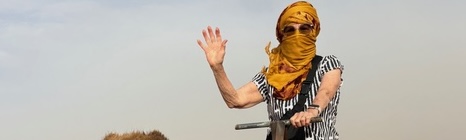
| Sara Geber on Solo Agers
| Retirement coach and author Sara Zeff Geber coined the term “solo aging” and has spent the better part of a decade helping people without nearby or involved children prepare for the realities of growing older. We spoke with her about who solo agers are, why their numbers are growing, and what she wants the world to understand about them.
Let’s start with your definition. Who is a solo ager?
My original definition was anyone — married or single — who didn’t have children. The idea was that without kids, there’d be nobody to depend on in later life. But I got a lot of pushback from people whose children lived far away, or whose kids were estranged. So I’ve expanded the tent considerably. I now absolutely include people whose children are estranged. Who may never see them again. And honestly, I’ve come to think that if you believe you’re a solo ager, then the guidelines for solo aging apply to you. I don’t want to be the arbiter. I want to keep the definition fluid so nobody feels excluded.
Support independent journalism on aging

What forces created this demographic in the first place?
Two main factors, at least for baby boomers. The first is what I’d call family diaspora — families scattered across the country and the world. People go off to college, fall in love with a new place, marry someone across the country. The second, and more fundamental, factor is that thanks to the birth control pill and the women’s movement, women of my generation had tremendous new opportunities. Many of us no longer felt we had to follow the script of marriage and children. Some followed the marriage script but not the children part — that’s my own situation. Others didn’t marry at all. The result is that baby boomers are actually the first generation to experience solo aging at this scale.
People make a lot of assumptions about solo agers — that they’re lonely, that they’ve missed out. How do you respond to that?
Those people are definitely out there. There’s a faction that looks at solo agers and pities them — “those poor people, life passed them by, they never had the joy of children.” And then in almost the same breath, there are people accusing baby boomers of hoarding resources and not contributing. You can’t really hold both of those views and be consistent. Either way, it’s judgment based on incomplete information, and solo agers didn’t design the tax system or the economy any more than anyone else did.
I personally don’t get a lot of that pushback directly. People tend to see me as a crusader for solo agers’ right to continue living well. And most solo agers have lived well. They haven’t had to worry about the things parents worry about — including, say, college tuition. On the other hand, smart solo agers recognize that the money they didn’t spend on children’s education is probably money they’ll need for their later years. Planning matters.
What about solo agers who don’t have that financial cushion?
They absolutely exist. Pew Research data from 2010 showed that among women without children, there was a high proportion who were educated and career-oriented. So the demographic skews toward people with some resources — but certainly not exclusively. There are solo agers living on Social Security, and the challenges for them are acute.
You’ve described yourself as a crusader. What does that mean in practice?
Mostly it means urging people to plan, to understand their options before they need them. The epiphany for me came through a close friend who was spending three or four months at a time across the country caring for her father-in-law, while her husband stayed home for his job. One day I said to her, “You and I don’t have children. Who’s going to do that for us?” I started researching and found that throughout history and across cultures, the answer has always been: family takes care of family. Americans of this generation have let go of that thread, and I don’t think we’ve fully reckoned with the implications yet. Baby boomers are just turning 80. Solo agers who don’t make some plans before that point are leaving a lot to chance.

Is ageism part of the picture?
It’s a huge part of it. Ageism has a profound effect on older adults trying to make sense of their lives and continue to contribute — and solo agers face it as much as anyone. What concerns me is that we can internalize it. I’ve caught myself being ageist. I’ll buy one of those birthday cards that jokes about what you can and can’t do at a certain age. I’m not a zealot about it, but I do think we all have to be careful not to perpetuate those myths ourselves. Solo agers are part of that broader fight.
What’s next for you?
AARP has engaged me to write what I think of as the definitive book on solo aging, as part of their series with Wiley. The plan is for it to be out in early 2027. I’ve been pushing other things aside to focus on it. I’m excited — and I think there’s never been more need for it.
Leave a Reply