| No. 1 in a series of intergenerational profiles |
| Jasper Swartz |
“It’s all about attitude”: This is the very first thing that retiree and D.C. artist Claudia Minicozzi says to me about retirement and aging when I interviewed her at her home in Northern Washington, D.C. “I don’t really think of myself as old.”
Claudia is 81 and has been retired for 27 years. Born in Akron, OH during the Second World War and raised in Philadelphia, she spent her career in the Smithsonian Institutions, but her foremost connection to the art world has been through her career as a painter.
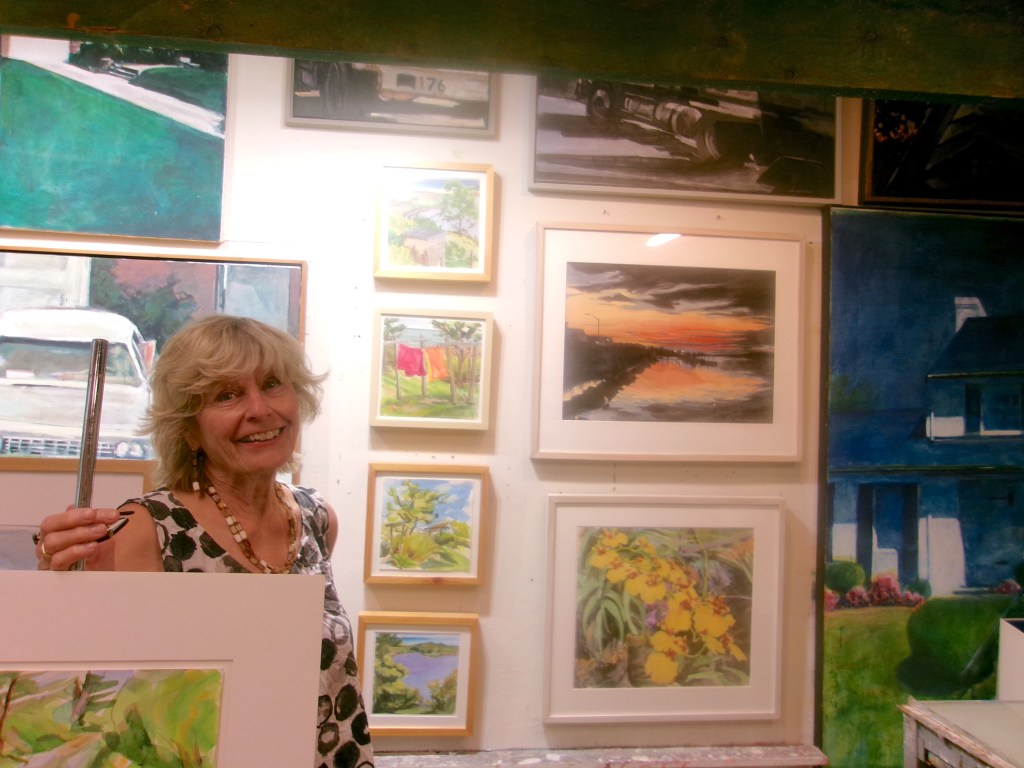
She works in watercolor, as well as her own special technique using diluted acrylics, which she uses to paint the landscapes ranging from the beaches of Lewes, DE to the Chesapeake bay to the Amalfi Coast. Other subjects of her work include her grandchildren, various wildflowers, and the koi pond in her back garden. “My mother was always telling me to paint more pretty things like flowers,” she laughs.
Claudia dreamed of becoming a painter her whole life but began to develop her style in earnest when the last of her three children moved out of the house and she began to have more time on her hands. She received advice on technique and style from her late husband, Val Lewton, also a painter, whom she met at the Smithsonian American Art Museum. “But at a certain point I had learned all I could from him,” she says. The two built a studio together in their backyard which houses both of their work.
Claudia did not spend much time thinking about what her retirement might look like when she was younger, but she did go through a brief ‘trial’ retirement, which gave her an idea of what she had to look forward to. She spent four months at age 50 recovering from surgery at home, during which time she painted every day, and the experience taught her how to stay fulfilled and energized on her own time.
To grow her exposure, Claudia maintains a presence on Instagram and Facebook, where she regularly posts her newest paintings. “At this age, there’s not as much benefit I can get from the art world,” she explains. “To me success is being able to share my work with as many people as possible.”
But sometimes that exposure also brings some unwanted attention. Claudia regularly receives messages from speculative NFT traders in her DMs, asking her to sell them the rights to images of her works. “They try to find unknown artists, but they don’t care about the physical thing. They don’t care about the work itself.”
The pandemic closed a seminal exhibition of her work at the Arts Club of Washington. The experience was disappointing, but Claudia continues to show her work in shows around the D.C. area. She has one this week that she is especially looking forward to.
She also has a tight circle of fellow D.C. artists who she keeps in touch with regularly. They have an annual trip to Martha’s Vineyard every summer where they paint the beautiful scenery, though this year their plans fell through. “I want to do better at immersing myself more in friendships,” she says. “Keeping in touch is so important.”
When she is not painting or seeing friends, Claudia makes sure to stay busy and active. Her beloved dog recently passed away, and she used to enjoy taking him on long walks everyday, no matter the weather. “I will definitely get a new one soon to keep me company,” she says.
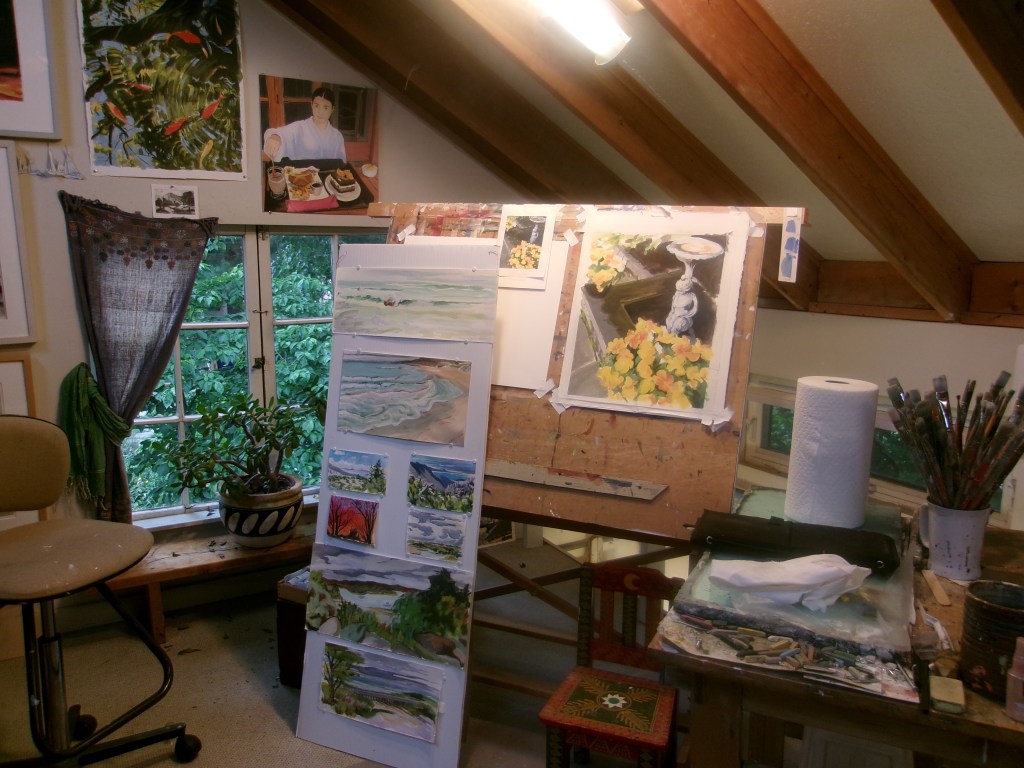
But most of all, it is her work as a painter that sustains her in her retirement. “Art has saved me,” she says. “I live to create beauty: it brings me out of the depths of despair. ”
Jasper Swartz is a rising senior at Oberlin. Their father started Aging in America News.

 Aging in America News
Leave a comment