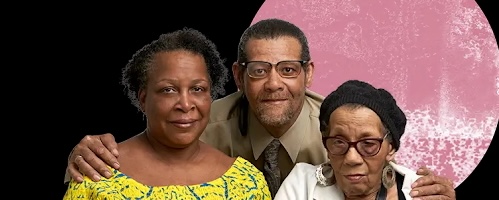
| Nicole Jorwic on the Million Care Conversations Project
| Caring Across Generations, the nonprofit led by Ai-Jen Poo, recently launched the 1 Million Care Conversations Project. We talked to Nicole Jorwic, the organization’s chief program officer (and a member of the Aging in America News advisory council), about the ambitious initiative, which comprises a survey as well as virtual and in-person community conversations designed to a new policy vision for care in America.
Why use conversations to build a policy vision?
We really want to get a full scope of people who both need and provide care, whether they’re paid or unpaid. And we want to reach a million people because we think that that will give us a really important data set about the solutions that caregiving families need, that people who need care need, and also give us a really good sense across audiences because a big goal of this project is getting outside of our bases and the people who are already going to take action on behalf of care. We want to reach those folks so that they also see that there’s a movement that’s working on solutions when so many people who are providing care and need care can often feel isolated and alone.
Support independent journalism on aging
Why is now a good time to launch this project?
The stance of this project is really deep listening, and we feel like it’s a really important moment to be out in the field hearing directly from people about what they need, because we do hope that we will have a moment to solve for care across the care economy. It’s really important that we’re hearing from those families so that when we have a moment, which I’m hoping is soon, to really address the long-term care crisis in this country, that we also have really solid data and also narratives and messages to back that up.

How did you design the research methods?
First of all, we’re working with really strong research partners and have been since the end of last year. We’re working with Urban Institute and New America New Practice Lab and also have gotten some guidance from AARP. Our focus was making sure that there were multiple ways into the dataset. There’s a simple five-question survey that folks can access online at careconversations.com. And so there’s a lot of different ways that people can participate in the project, which is because the goal of the project was to reach the Caring Majority, which is what we call all of the people who will need or give care where they are.
Who are your inspirations?
When we talked about it originally last summer, a major example that we thought of was the work in South Africa to build the constitution where there were literally boxes in every community where people could say their ideas about how different things work. We know that the people who are in the broken care economy right now are often the best at articulating the solutions that they really need.
What themes are emerging?
We went into Indiana, Georgia, and Arizona, and the five themes that really came out of that phase and that’s shaping the campaign:
- People want support
- Financial support is popular
- Evolving and improving existing programs seems to be more acceptable than new government programs
- Care crosses political lines
- Simplicity and transparency are really important for building trust

The “Caring Majority” is an echo of Richard Nixon’s Silent Majority, and it has a double meaning. It’s the people who are caring and the fact that they care and they’re not apathetic.
Yeah, absolutely. They do care. They’re caring for their families, and they’re caring for their friends, and they’re caring for their communities, but the reality is also people who are providing care often don’t feel that care in return. So if we can build solutions, if we can build trust, we can build a movement that can’t be ignored when it comes to addressing the caregiving needs of American families.
Leave a Reply