| A look into NYC’s Award-Winning Geriatric Mental Health Program
| Bella Bromberg
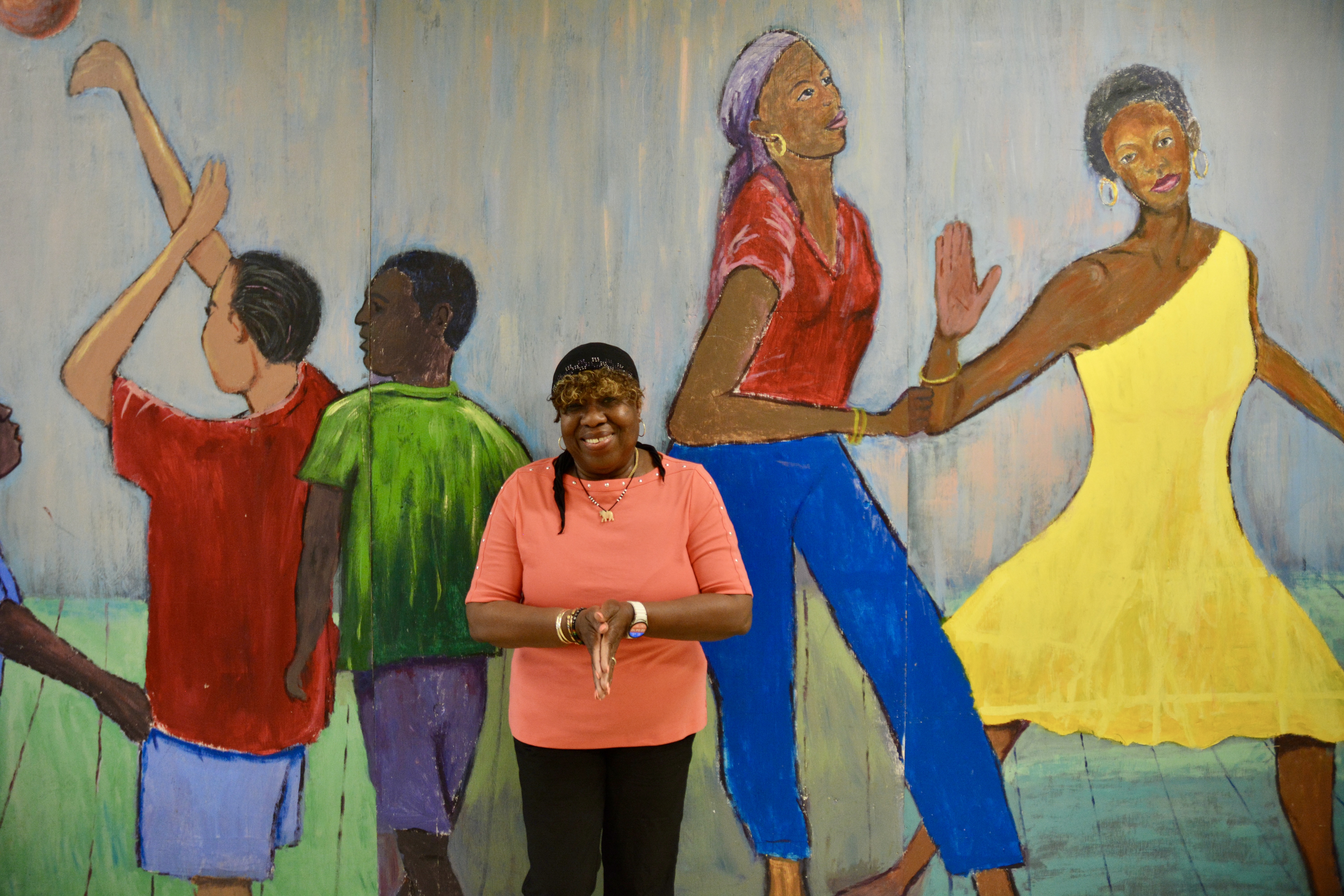
| Sharon White used to think the term “mental health” meant someone was “crazy.” Growing up in Jamaica, she said, people did not openly discuss the topic. But after spending the past three years receiving care through New York City’s Geriatric Mental Health Program at the JASA Starrett Senior Center, her understanding has changed.

One of White’s central takeaways from the program is that mental health exists on a continuum.
“Everybody has some kind of issue going on,” said White, 70. “It’s just enlightening to know that you’re in a group and you’re not alone.”
One of White’s friends has dementia, the kind where “she doesn’t recognize anybody,” White said. “Her husband died the other day, and she didn’t know who it was in the coffin,” White recounted. “That was a little frightening.”
Support independent journalism on aging
White said that many of her fellow senior center friends fear losing their memories. To help assuage some of the group’s anxieties on this topic, Courtlyn Shimada, a clinician with New York City’s Geriatric Mental Health Program, hosted an informational talk on different parts of the brain and practical steps that members could take to strengthen their neurological health.
The session was “an eye opener,” White said. It was heartening to know that “there are activities that we can do to limit some of the things that happen when the brain fails,” she said.
Gregory Rose, a representative for NYC Aging, noted that the Geriatric Mental Health program has grown significantly in recent years. For its onsite health model that prioritized bicultural and bilingual clinicians, the program won an achievement award from the National Association of Area Agencies on Aging (now USAging) in 2018.
Rose attributed the program’s growth in part to its expansion into additional communities and its language offerings, including Cantonese, Italian, Russian and Spanish.
Notably, compared to other cities across the country, older adults living across New York’s five boroughs are more likely to live below the poverty line, according to a data report by the NYC Department for the Aging.
The program operates using an inclusive fee structure: patients with coverage are billed, while those without insurance can still access care for no cost.
“We never turn anybody away based on the ability to pay,” said Jo Anne Sirey, 64, a Geriatric Mental Health provider for the program and professor at the Weill Cornell Institute of Geriatric Psychiatry. Her institution, Weill Cornell, supplies many of the clinicians that serve participating seniors across the five boroughs.

Older adults come to the program through a few different routes: one, by finding a provider on the NYC Aging website who can direct them to the nearest senior center with a mental health program; two, by calling a help number for more information and a referral; or three, by word-of-mouth.
“I wish people understood how important it is to integrate mental health into non-mental health settings,” Sirey said. “I think we should really be thinking about mental health as a service that’s integrated into all different creative settings,” she added.
For people who may feel stigma around the idea of clinical talk therapy, she said, group activities and broad conversations about mental health can open the door more gently than a traditional one-on-one session, which can be an uncomfortable, daunting experience for someone who has never before sought mental health care.
Courtlyn Shimada, 30, a clinician with Weill Cornell, has spent the last three years organizing these sorts of entrée activities at the Starrett Senior Center, which she and other clinicians refer to as “structured engagements.” In essence, they are “a door people can enter through,” Shimada said.
One such structured engagement is the Tea Chatters group, which emerged at Starrett City nearly three years ago.
“Every Tuesday at one o’clock, everyone knows I have Tea Chats,” Shimada said. “Everyone goes into the big room and we discuss a different topic related to well-being or mental health.” Recent topics have included cognitive distortions, grief, and loneliness.
The group, which started with just a few participants and now boasts 25-30 regular members, also has a WhatsApp group chat, where members communicate daily.
The loveliest part about a structured engagement group, according to Shimada, is that “there is this community feeling,” she said. “Particularly this one, because it’s been running for so long.”
Shimada stressed the value of being a clinician embedded in senior centers rather than requiring patients to visit her for an appointment in an office far away from their neighborhood. “The fact that we are placed in communities means that we can build relationships over time with people,” Shimada said. “The fact that I get to be here—and they know that I’m not going to just leave and have them come visit me an hour into the city—it means that we can build rapport and comfortability.”
The most common mental health conditions that Shimada sees in her patients are depression and anxiety. Additionally, though they might not be considered official clinical diagnoses, “things like loneliness and grief are coming up a lot,” she said. “A lot of times, that can develop into a depression diagnosis for people,” Shimada added.

Through her work, Shimada’s been struck by the parallels between issues that older adults and other age groups face. “I think about retirement, and I think about the similarities between that and someone who’s graduating college,” she said. Similarly, “we have a lot of people who have lost a spouse in recent years and are re-entering the dating scene,” Shimada added. “That can be intimidating and different—not all that different from when you’re entering the dating scene as a younger adult.”
In other words: “Our needs as human beings don’t really change drastically as we get older,” Shimada said. “They just look a little different.”

Since taking part in Starrett Senior Center’s mental health program, “I think I’m smiling more,” White said. “I’ve been revived since coming here,” she added. “It’s like a second home.”
Above all, White wants to urge the younger population not to forget about seniors. “We still exist, we still have ideas, and we can still play a role in society,” she said. “Don’t just write us off—we’re still here.”
Moreover, “we still want to look nice,” she said. “We still have goals.” White’s biggest goal right now is to stay active so she never has to depend on a walker and so she can continue to take yearly trips with her son.
She wants to be in control of her own body—and mind—for as long as possible.
Bella Bromberg is a freelance writer based in New York City. She holds a bachelor’s degree in English from Barnard College and is earning her master’s from Columbia Journalism School.
Leave a Reply