| Observations of a Newly Minted Older Person
| Louis Tenenbaum
| I was thinking recently about what a year-end review would look like for my company and realized it would make a good column for Aging in America News.
My day job is co-founder and CEO of a small tech startup. From my phone and computer skills, you would never guess that. I am a proud digital immigrant—one of those people who will happily hand my phone to a digital native I’ve never met and ask them to perform what should be a very simple function.
So how do I end up saying, “I’m the CEO of a tech startup,” when someone asks what I do?
It all started many years ago in a place called Ann Arbor, Michigan.
I’m a carpenter—first a hippie-dippy carpenter in this college town, building timber-frame solar houses. After moving to the Washington, D.C. area, I became one of the first contractors in the country to focus a remodeling business on accessible remodeling, back in the early 1990s.
I worked on homes for people with spinal cord injuries, ALS, multiple sclerosis, amputations, Parkinson’s disease, and many families of people with cerebral palsy. Along the way, I wrote and taught courses on accessible remodeling for the Administration on Aging, nonprofits, and the National Association of Home Builders, and gave more consumer presentations than I can count. This work was deeply rewarding, but I wanted to affect more people and more homes.
All of this began before the term “Aging in Place” was even in common use.
I also did advocacy work, including helping introduce a bill to the U.S. Congress (HR 7676) that would have incentivized accessible remodeling, similar to tax credits for solar panels or hybrid cars.
For years, I assumed society would eventually update our homes to match the realities of an aging population—just as we updated them for wireless technology or accepted that tollbooths no longer needed humans in them.
That assumption has not aged well.
One quarter of older Americans fall every year. About half of those falls happen at home, and roughly 80% occur in the bathroom. Properly installed grab bars can reduce fall risk by about 30%, and many experts believe the true impact is even greater. Falls threaten independence, drive enormous health care costs, and often trigger the need for caregiving. These fixes work best before someone falls—before injuries derail lives and drain retirement savings.
In 2010, I wrote about this subject in a white paper, Aging in Place 2.0, for the MetLife Mature Market Institute. Aging in place is far more widely recognized today than it was then. Yet we are still not preparing homes at anything close to the pace needed to make it real.
Here’s the irony: despite decades of work, recognition, articles, media coverage, and informational pamphlets—almost nothing has actually changed. I was frustrated. The work was rewarding, but I wanted real scale.
I decided that meant letting go of the big advocacy push and focusing on something more direct. Big ideas matter, but getting anything done is hard. So I began focusing on solutions that are simple, low-cost, and effective.
One of those solutions is to apply a basic universal design idea: all new homes should have grab bars to all existing homes. Doing so should be no more controversial than adding Wi-Fi to an older house.
Which is to say: only if you think it’s still 1995.
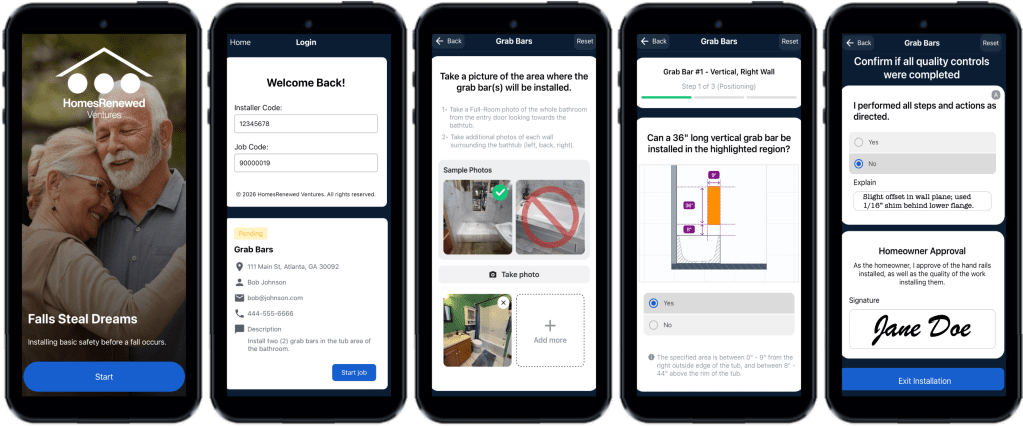
My partners Susan Kimmel and Seymour Turner and I secured more than $2 million in grant funding from the National Institute on Aging to build an evidence-based mobile phone tool that makes installing grab bars fast and safe.
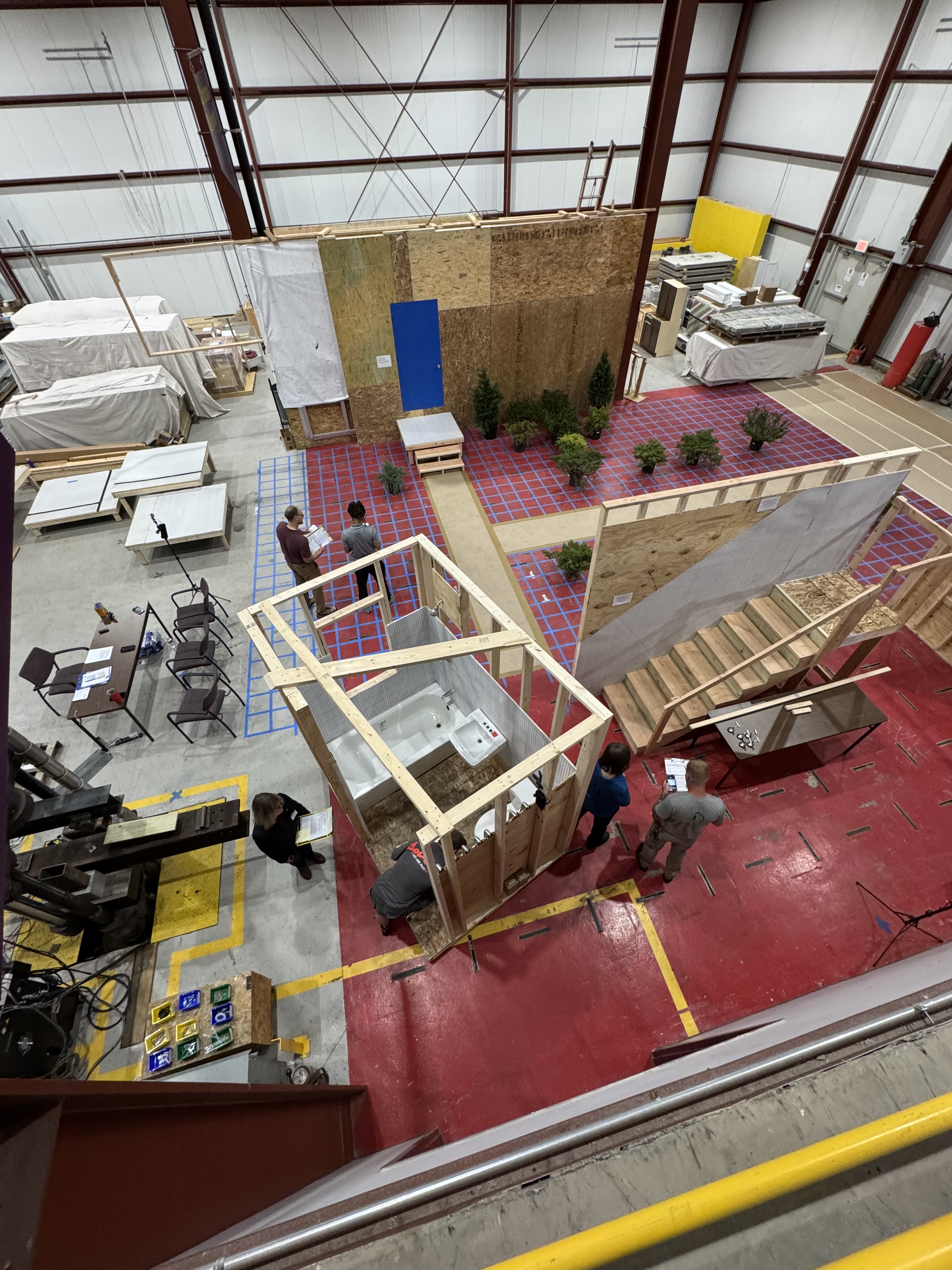
After rigorous laboratory testing, we’re about to begin field tests in the D.C. metro area. This tool will enable anyone who can use a drill and a tape measure to install grab bars safely. If it works the way we hope, agencies and companies will finally have a way to act on what the evidence has been telling us for decades.
After all these years, I’m still a carpenter at heart. I still believe the best solutions are the ones you can actually build. And I’m tired of waiting for common sense to catch up with an aging population that needed these fixes yesterday.

Louis Tenenbaum is a longtime advocate for aging in place, co-founder of the HomesRenewed™ Coalition, the HomesRenewed™ Resource Center, and HomesRenewed Ventures, LLC and a nationally recognized expert on home modifications that support independent living. Discover more columns in this series.


 Aging in America News
Leave a reply to jetcityorange Cancel reply