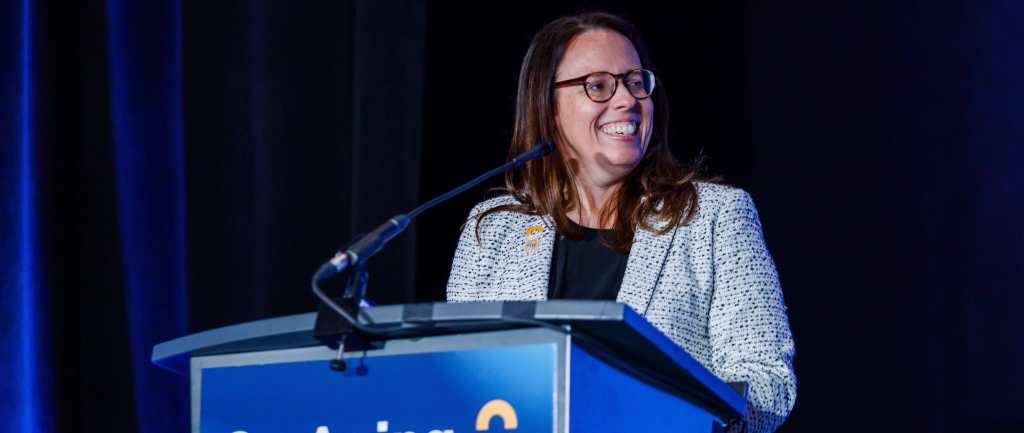
| Q & A with the American Society on Aging’s Leanne Clark-Shirley
| Leanne Clark-Shirley, Ph.D., is President & CEO of the American Society on Aging, a membership organization dedicated to a more coordinated, age-inclusive society. Here she describes the challenges and opportunities of the present moment.
Who is included in ASA’s 5,000+ members?
Everyone who works with and on behalf of older people is welcome. That could be professionals in care and treatment, folks that are marketing to older people, or advocates, as well as older people who themselves are starting new businesses.
How do you explain to a younger person why this population matters to them?
We are all part of an aging society. We all have a stake in it. And we’re all talking about our future selves, whether we’re 20 or we’re 95.

And shifting demographics make it even more important to honor the expertise of older people.
Within a matter of years, there will be more people over 60 than children under 18. And that’s never happened before. It’s also a huge opportunity. Just by virtue of the numbers, as more of us grow older, there will be more of us visible. More of us will demand that things change to work in our favor. And I just want to remind everyone that the President of the United States is an older adult, 79 years old. So every time you hear him talking about programs for seniors, he’s talking about programs that he’s eligible for, too.
What can attendees expect at the next On Aging conference, April 20-23, 2026?
On Aging 2026 takes place in Atlanta. We just opened the call for proposals. We’re going to offer Spanish-language sessions for the first time. We’re also working on some opportunities for attendees to get out of the hotel and into the greater Atlanta community. Atlanta is an epicenter of good trouble, so you can expect some of that at the conference, too.

What do you see when you look at the current landscape for older Americans?
We’re in a moment where demand for aging programs and services is higher than ever before, and it’ll be higher next year and even higher five years from now. Funding has basically stayed flat, which actually means funding has decreased, and there are really strong signals that that public support will recede even further. What also worries me is this misunderstanding, misinterpretation, weaponization, and near-illegality of diversity, equity, and inclusion.
There’s so much diversity inherent in aging.
So much of our aging experience is influenced by our characteristics. We know people of color experience wage disparity and are more likely to live in built environments with more exposure to pollutants that will shape their experiences as they grow older. If you’re part of the LGBTQ+ community, you can be discriminated against in communities and workplaces and in health care settings. You’re going to bring that into your old age. Black and Hispanic elders high rates of dementia. So if we can’t even say “Black elder,” if we can’t even talk about programs to support Hispanic elders’ cognitive health, how can we even begin to meet the needs of our aging society?
What opportunities do you see?
I see younger people and older people embracing diversity. I think there’s a lot more tolerance in the younger cohorts right now. And I also see that happening in grandparents. So many grandparents are so accepting of their grandchildren who come out as transgender or nonbinary or gay. Grandparents have this special way of saying, “You know what? I love you and I’m excited to support you on that journey.”

 Aging in America News
Leave a comment