| My Halmoni
| Bella Bromberg
| “Every older person in your community has a story worth telling.” In the spirit of this declaration, Aging in America News and The Legacy Project collaborated to field and publish five intergenerational portraits composed by younger (17-25 years old) writers. This is the first in the series.
| Beginnings
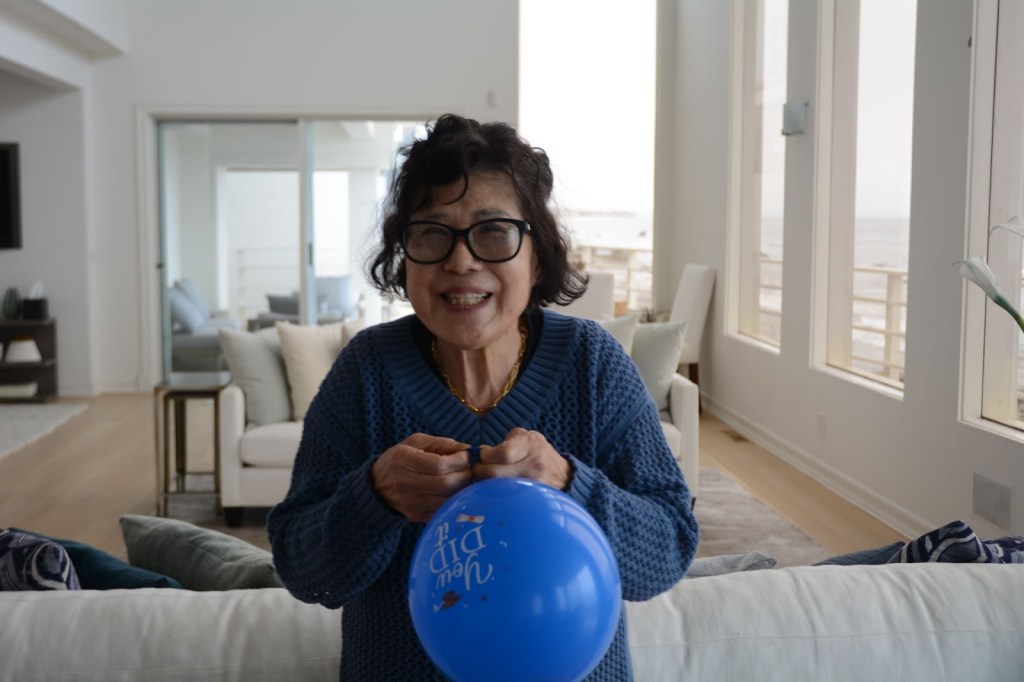
On an autumn day in Seoul—November 5, 1944, to be exact—Lee Soon Duk gave birth to Kim Hee Ja, my grandma (or halmoni in Korean). Lee had met my halmoni’s father, Kim Myoung Won, through an arranged marriage.
Kim Myoung Won, a business owner and the de facto mayor of his town, was a generous man. Self-made and hardworking, Hee Ja learned to value those two traits with particular reverence, for they had made her father rich. He owned a brick factory. He presided over acres of land. Most importantly, he often housed workers in some of his numerous residences and was known to give away money on a whim to those in need.
Hee Ja was the middle child of five siblings and the eldest girl. “Two girls, three boys. That was our family,” she told me later. In the early years, the children got along harmoniously.
School Days
The frigid air bit at Hee Ja’s arm like a small dog begging for food. Each gust of wind pushed her further and further away from her destination—school. Every morning for years, she had made the miles-long trek. Always with friends, always in their uniform skirts (“no matter if it was sunny or snowstorm weather,” Halmoni lamented retrospectively) because they weren’t allowed to wear pants in the classroom. Cold air nipping at her extremities? Just part of her routine.
Hee Ja didn’t mind school. She didn’t love it either, but she liked learning, and from girlhood, her parents stressed to her that education was important. She listened.
She also loved the school’s annual field day. For hours, everyone gathered on the field to play games, dance, sing, and run. It was her favorite day of the year. Another once-yearly event brought the students to a museum or famous ancient Korean site; the school also provided a special lunch. Halmoni remembers eating a lot of kimbap (seaweed and rice rolls), fruit, and “special cookies.”
“We are exciting very much,” she said of the day.
One afternoon, when Hee Ja had arrived back at home from a long day of classes, she saw her brother crying and yelling with their mother in the kitchen.
“What happened to him?” Hee Ja pressed, looking to her mother for answers. Her mother sighed, pulled her raven hair out of its bun, let it cascade down her delicate, pale shoulders. She then looked at Hee Ja, concern etched into her forehead.
“He says that when he was coming home on the bus today, he felt really dizzy and had a headache,” her mother said.
Her brother seemed off lately. Everyone had noticed it. But his middle school was known to be a pressure cooker, so the fact that he felt under the weather or insufficiently rested did not necessarily ring any alarm bells.
Soon after that day, Hee Ja’s brother transferred to a new school. Even so, something didn’t seem right. For months, he moped around the house, perennially lethargic and dejected. With time, this way of being became an integral part of his personality, his character. Years later, when Hee Ja learned he had died by suicide at the age of just 50, she felt overwhelmed by conflicting emotions.
“When I got the call, I was really upset,” Halmoni told me. “But also I’m so happy,” she said, bewildered at her own words. “Because now he doesn’t have to suffer.”
She was not alone in her thinking. “Everybody was thinking, he got a good decision,” she said. “He didn’t even marry. He doesn’t wanna marry. He doesn’t wanna deal with people. He just lived on his own.”
War
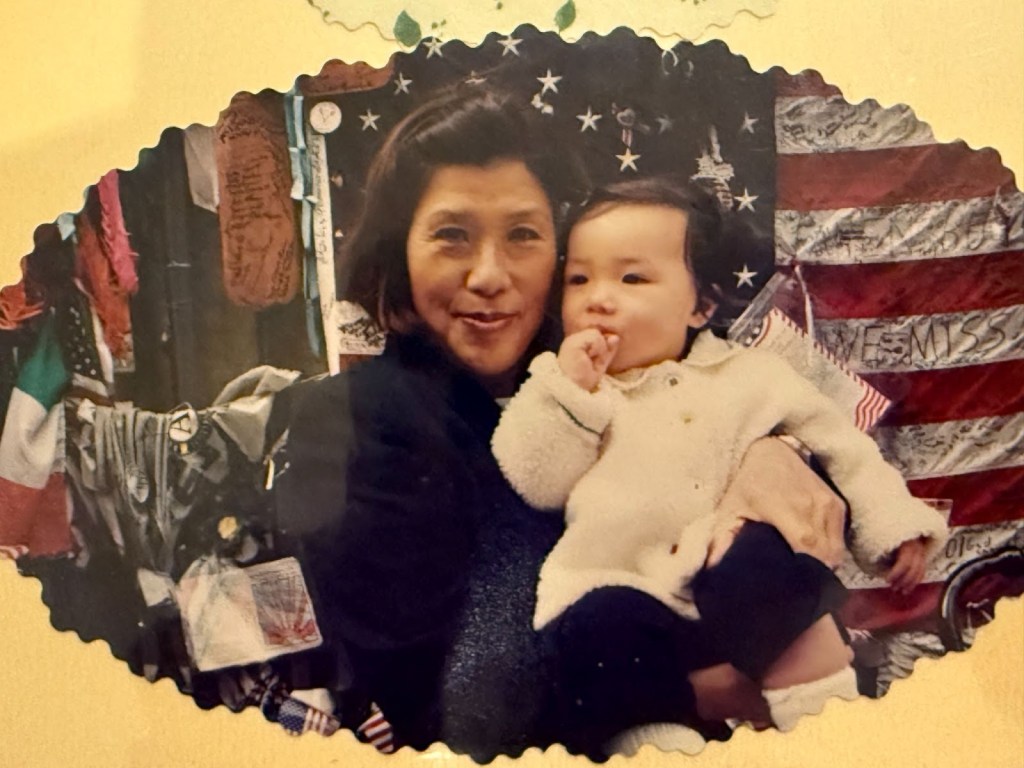
Hee Ja was six years old when North and South Korea went to war. Though her immediate family was from South Korea, she also had family living in the North. She would never see those relatives again.
Their family had to escape Seoul (“Everyone was fleeing,” she recalled). Overcome with worry and fear, her parents told her that she could not trust anyone—anyone could be a spy for the other side. No one was safe.
“For so many Korean people during war, we don’t know who is spy and who is good people, who is bad people,” Halmoni said. “During wartime, some bad people and rich people, education people, they grab them and they kill them.”
At one point, Hee Ja’s father found himself captured and taken in for questioning.
“Once they caught him, grab him, took him somewhere. He stayed there about two or three days, and then he ran away somehow,” Halmoni explained.
Though he escaped, the ordeal instilled enough fear to drive her father’s family into a cave-like bunker in the secluded countryside for the war’s duration.
Halmoni doesn’t remember much of those months in the country, besides hazy scenes of playing outside with her siblings, then sprinting to the bunker to hide at the softest rumble of an airplane.
When the war ended, Hee Ja and her family returned home. Upon arrival, Hee Ja gasped. The grass in front of their home, usually tightly trimmed, had sprouted up to the height of her waist.
“I don’t remember nothing,” she said. “But after war we came back home. The grass growing a lot. Like my half size in grass. And everybody was so hungry…”
Marriage
It had been a calm day at high school. Hee Ja had just arrived home. It was spring, and several weeks prior, the azaleas had started to bloom. Hee Ja’s graduation day was fast approaching. As she walked towards her room to get started on her homework, she noticed an unfamiliar face—a young man sporting a soldier’s uniform. His face: stern but handsome, maybe even beautiful. Hee Ja’s heart couldn’t help but skip a beat.
“He is here running an errand for his supervisor,” Hee Ja’s father explained. The young man’s lips curled up into a slight smile as he looked Hee Ja up and down. She blushed, embarrassed and excited all at once.
The young man was Park Sun Ming, a soldier stationed in Hee Ja’s neighborhood, and several years her senior. Born in North Korea, he had traveled to the south with his father and brother at the age of nine.
Park Sun Ming stared intently at Hee Ja.
“Would you like to go get some ice cream?”
His eyes, so filled with hope, arrested Hee Ja. She couldn’t help but say yes. Her father seemed to have no issue with the young man, so they left together, walking out into the balmy afternoon.
And so it began. She was just a teenager and easily influenced by Park Sun Ming’s charm and affection; she had never felt so much attention before. Nearly every day then on, Park Sun Ming walked by her house, came up to her window, and whistled her favorite song. This became their secret code, for her father no longer approved of Park Sun Ming. Nor did her mother. In fact, they hated him. An ice cream date was one thing, but a serious relationship was another. He came from an impoverished family, and Hee Ja’s father feared that the man had nothing to offer his daughter in terms of financial security.
When Hee Ja heard him whistling the song, she’d sneak out of her window to meet him for ice cream. With time, Hee Ja was in love.
Her parents were livid when they caught wind of the dalliance. They attempted to lock Hee Ja inside the house. They hid her shoes so she couldn’t go outside. Her father even communicated with Park’s superior, the head soldier, so that Park would not have to come by the house for business errands anymore.
But Park Sun Ming persisted. Any chance he got, he would walk by Hee Ja’s window. Whistling, wishing, waiting.
Eventually, Hee Ja became pregnant, and the two wed shortly thereafter. Within months, however, Hee Ja grew disillusioned. Park Sun Ming’s initial charisma vanished. He was different now—violent, aggressive, sometimes cruel. It didn’t take long for Hee Ja to realize she had made a horrific mistake.
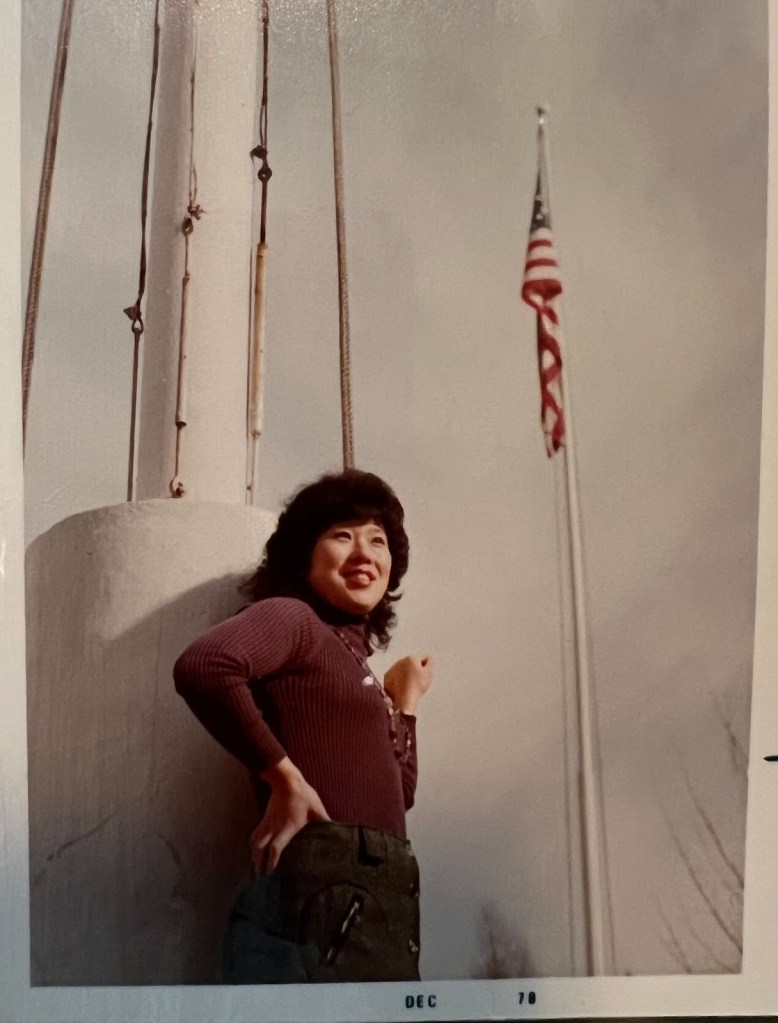
“I wanted to get away from him, but I don’t know what to do,” she said later. “I didn’t like him. But I had no choice.” After Hee Ja had three children with him—Phillip, Won, and Melinda, my mother—she started contemplating divorce. But Korean society did not smile upon divorcées, and child custody battles typically favored the father. My halmoni was able to gain custody of her daughter, but not her sons.
Several months after finalizing the divorce, Hee Ja found work in a tailor shop owned by a family friend. Though she had created legal separation from Park Sun Ming, she felt desperate to start a new life far away from his influence and intimidation. One day in 1978, an American G.I. named Johnny Nashe entered the tailor shop. He needed a new suit. Hee Ja helped him get fitted.
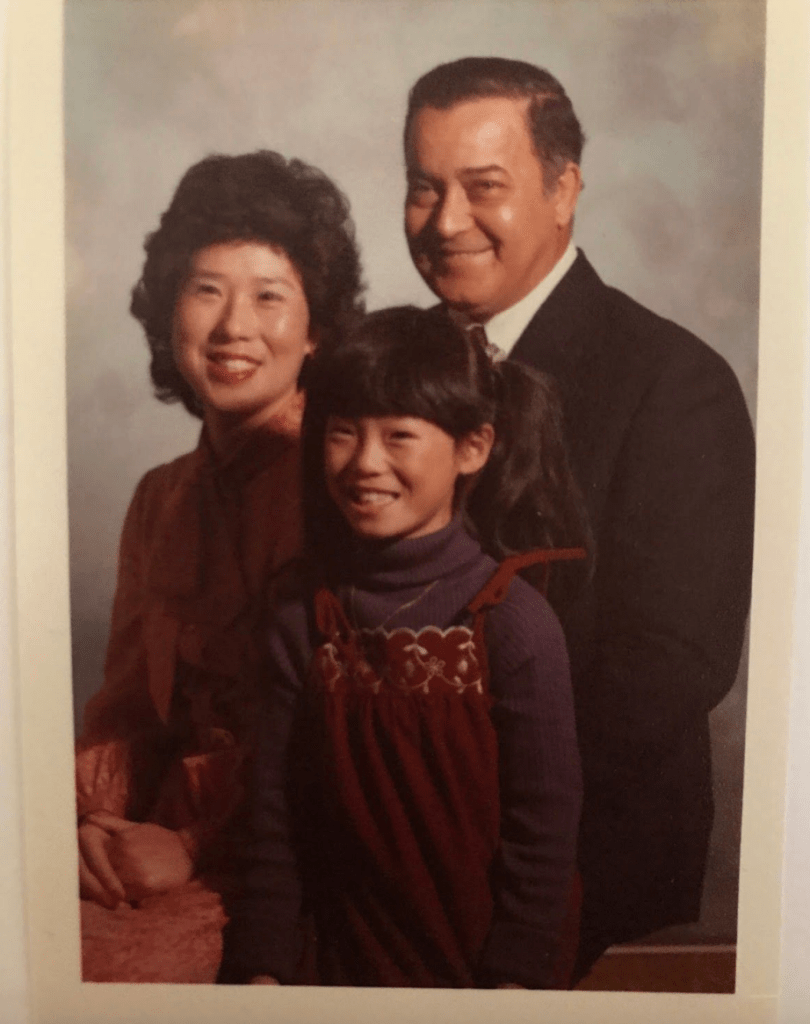
She wanted to move to the States. Johnny wanted a wife. Within months, two were wed and on a flight to the United States, my mother at their side.
Bella Bromberg is a freelance writer based in New York City. She holds a bachelor’s degree in English from Barnard College and is earning her master’s from Columbia Journalism School. She works at The Moth, the storytelling nonprofit.

 Aging in America News
Leave a comment