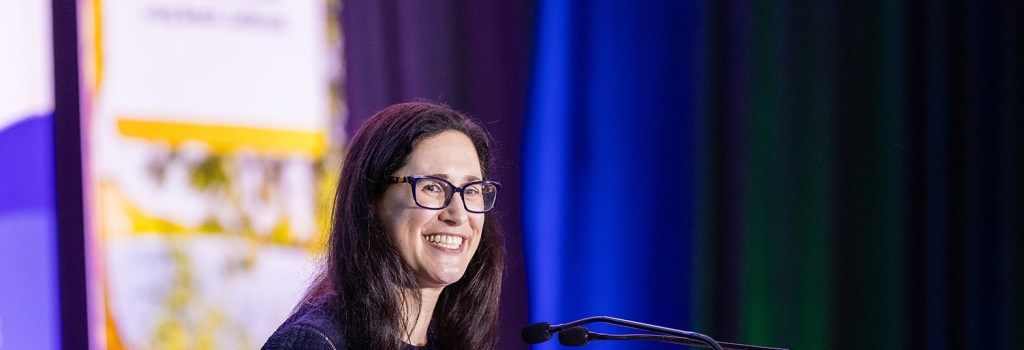
| Q & A with Grantmakers in Aging’s Lindsay Goldman
| Aging in America News spoke to Lindsay Goldman, CEO of Grantmakers In Aging, about her career trajectory, advocacy for older Americans, and the intersection of aging and disability. This interview has been edited for length and clarity.
| How did you first get interested in this field?
| When I was in the sixth grade, our teacher took us to visit the Actors Fund Home in Englewood, New Jersey, where people from either Hollywood or Broadway were aging. And we went there not because we were going to cheer up the sad old people, but to learn from people who had lived through some of the history that we’d learned about in class. Despite some of them having some later-life challenges, they had something to offer us. They were living repositories of history. I think it was the way it was framed that made it a very formative experience, but I don’t think I realized how meaningful it was until later on.
When did it become your career?
My first leadership role was director of a social adult day program for people who were physically and cognitively frail. Mostly dementia, but also some people who were not suffering from any kind of cognitive challenges. And from that point on, I stayed with aging. I found my passion. I’ve been on all sides of aging issues—grant writer, grant maker, program administrator, researcher and so on—and ultimately that helps to inform my perspective on whatever issue I’m dealing with.

What’s the best leadership advice you’ve received?
Aviva Sufian—who helped start the Administration for Community Living and now leads our Aging Advocacy Initiative—once told me something that has been incredibly useful in every role, including as a parent: You don’t actually need to know everything. You just need to know the right questions to ask and how to find the person who has the answers to those questions. Nobody knows everything. The sooner you become comfortable with the fact that you don’t know everything, the better you are at leading, because you bring people to the table who have the knowledge you are lacking.
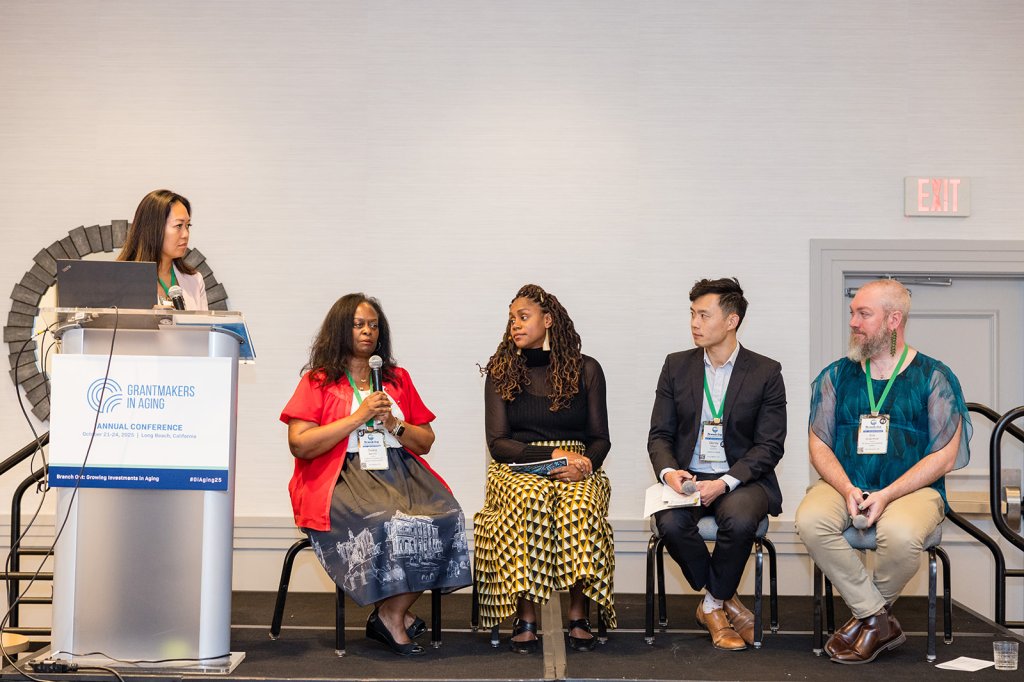
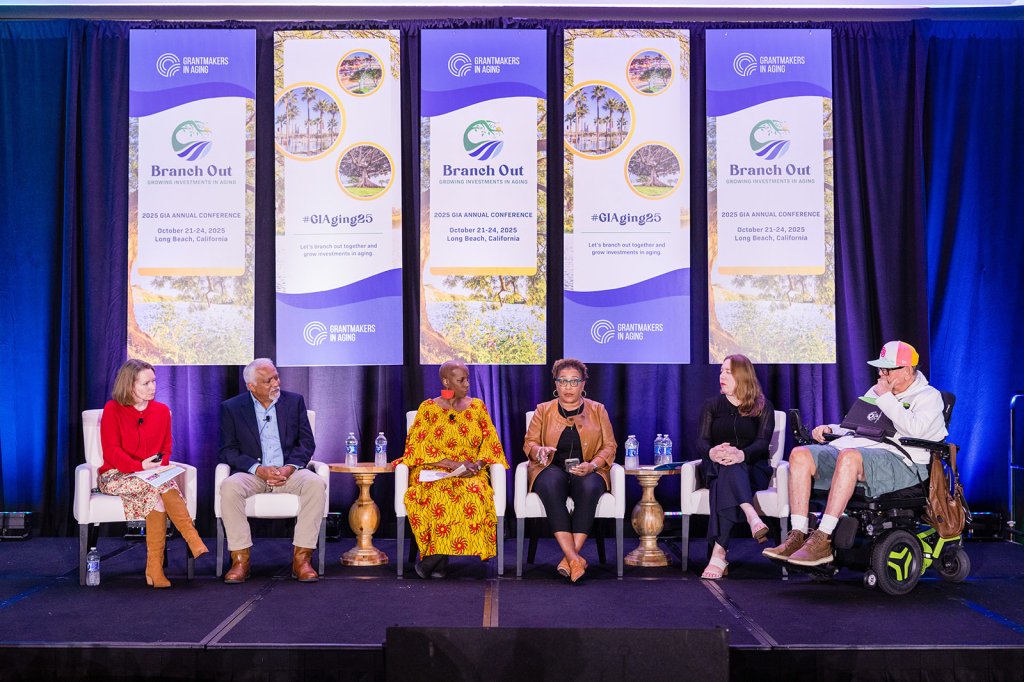
I got a lot out of the Grantmakers in Aging conference in Long Beach in October. How did you feel about it?
It is very much like planning a wedding, and it does go by in a blur, and then you have the post-event depression that it’s over. But I feel really good that we had 70 people who had never been there before. Attracting people who are either new to aging or new to philanthropy, that’s kind of our sweet spot. People really appreciated the deep dive that we did into the aging and disability intersections. I think that we opened people’s eyes a little bit, to provide people with some compelling data for why disability is an aging issue and aging is a disability issue.
Download “Better with Age: A Guide to Funding in a Longevity Society”
What should we know about the Aging Advocacy Initiative?
It is in the planning phase right now. The purpose is to elevate aging within policymaking and budgeting at all levels of government. We’re responding to a number of gaps that we see. First, a lack of any kind of unified messaging around what we all want and what we all need in later life. We’re also missing any kind of organizing infrastructure at the local and state level. So even if you understand why you should be concerned about later life, there’s not an obvious place to go if you want to advocate for different policies and funding mechanisms. We also see a major lack of people power, and we feel like we should be playing a role in helping people wake up a little bit to see the discrepancy between the system that we need in later life and the system that we have.

What’s on deck for GIA in 2026?
I see us continuing to focus on our mission of mobilizing money and ideas and providing opportunities for our sector to network, learn, and act. We’re trying to grow our membership as much as possible. We need more people and more funders to care about later life and to understand how whatever they’re investing in has an effect on later life. We also think it’s critical to equip funders with the knowledge to make the most informed decisions possible, because we really can’t afford funding gaps, funding redundancies, funding inefficiencies, which emerge when people don’t have adequate pathways to communicate with each other and to understand who is funding what and where, and how much and when. And so we’ve just launched a new grants database that piloted with about a quarter of our members, and we’ll expand to the full membership in 2026. Finally, we’re providing opportunities for people to co-fund and take collective action, because we’re stronger together. And it’s only through that collective action that we can work to elevate aging within not just policymaking and budgeting, but within public discourse.
 Aging in America News
Leave a comment