| Keeping My Promise to My Mother
| Jhoshua Ang Price
| Aging in America News is partnering with Tayo—whose mission is “to empower the Filipino community by providing accurate, culturally relevant information and essential services”—to explore cultural ideals about caregiving.
| Caregiving is often described as an act of love, but for Filipinos, it is also an integral part of our identity. Our culture teaches us that caring for our elders is not only a responsibility—it is part of who we are. It is not a burden, but a normal part of life—and it is a gift to both the one receiving the care and also to the giver. It is woven into the core Filipino cultural values of kapwa (shared identity/togetherness), bayanihan (community care), and utang na loob (debt of gratitude). And for many Filipino families like mine, it is a responsibility that begins long before our parents grow old.
I was born in the U.S. but spent my earliest years in the Philippines, where afternoons napping on a banig (woven mat)—jeepneys honking outside, the breeze stirring a wind chime, Tagalog TV playing, my mother singing and cooking with ginger and garlic—made me feel completely safe and loved. Those moments weren’t just memories; they were my first lessons in kapwa and the cycle of care that would one day pass to me.
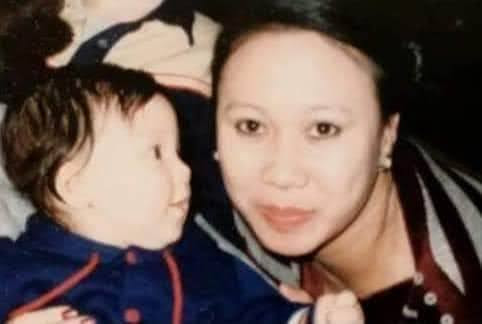
My parents had lived by these same values. My mother grew up in a home where her own grandmother lived with them until she passed. On my father’s side, the same was true. He cared for his own mother after she suffered a stroke, tending to her needs until her passing. Caring for elders was not framed as a chore — it was simply what a family did. Both of my parents had lived this cycle of care themselves, without complaint, without hesitation. Seeing this only reinforced what my parents taught me repeatedly: that one day, I would care for them. It was never demanded of me. It was simply expected, understood, inherited. A legacy of love passed down through generations. And it is my greatest honor.
Even when I was a child, my mother made sure I understood this cycle. During baths, meals, bedtime — she would gently remind me that one day I would do the same for her. As I grew older, especially through my teenage years, she repeated it often: as the eldest son, I had a duty. Not out of burden, but out of purpose. She would say, “Sa ulihi, ikaw na maalaga sa amon.” One day, you will take care of us.
That day came sooner and harder than I expected.
My mother’s health began declining in 2018: diabetes complications, hospitalizations for high blood sugar and kidney disease, and then COVID-19 in January 2022, which in turn, caused a stroke that left her bedridden and significantly impaired her ability to care for herself. Her memory isn’t as sharp now, and she sometimes gets confused. My father, now also in his 70s, has his own health issues, including chronic heart problems and a pacemaker he received in 2022. He remains mobile and active, but he can no longer drive, and I worry about his overall health.
So without hesitation, I stepped into the role my mother prepared me for – as a caregiver. I handle the finances, cook the meals, clean the house, do the laundry, go grocery shopping, take care of their pets, take them to their doctor visits — just as they did for me when I was a child.
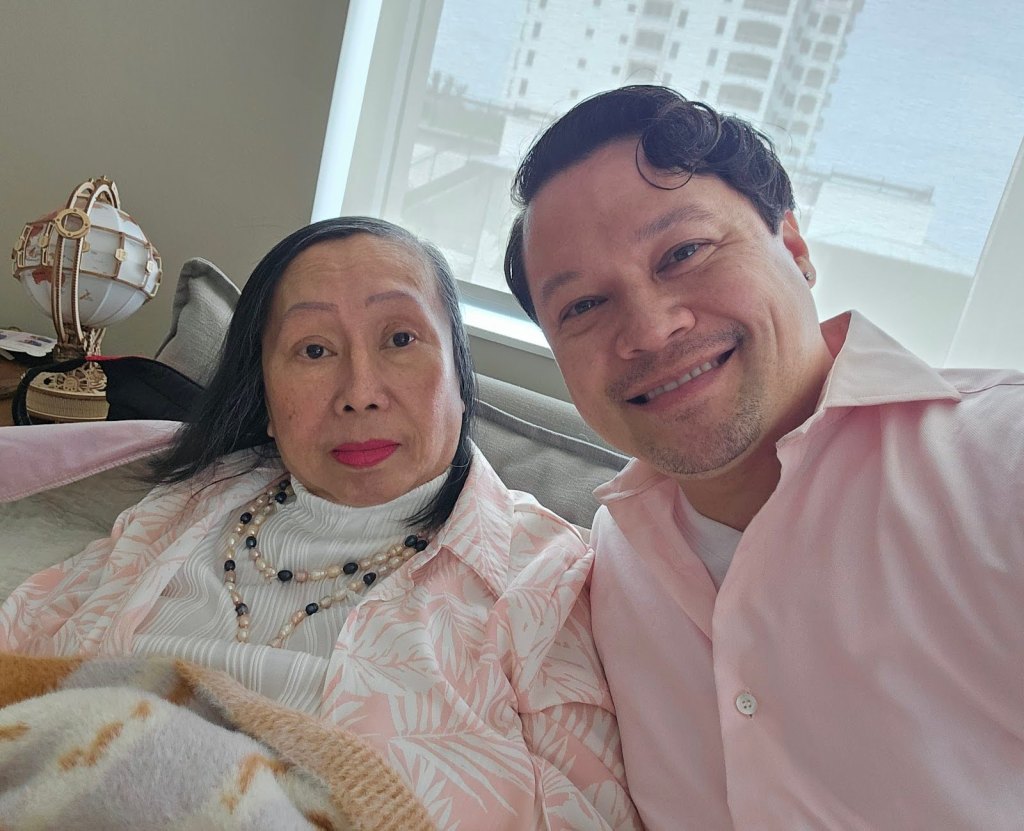
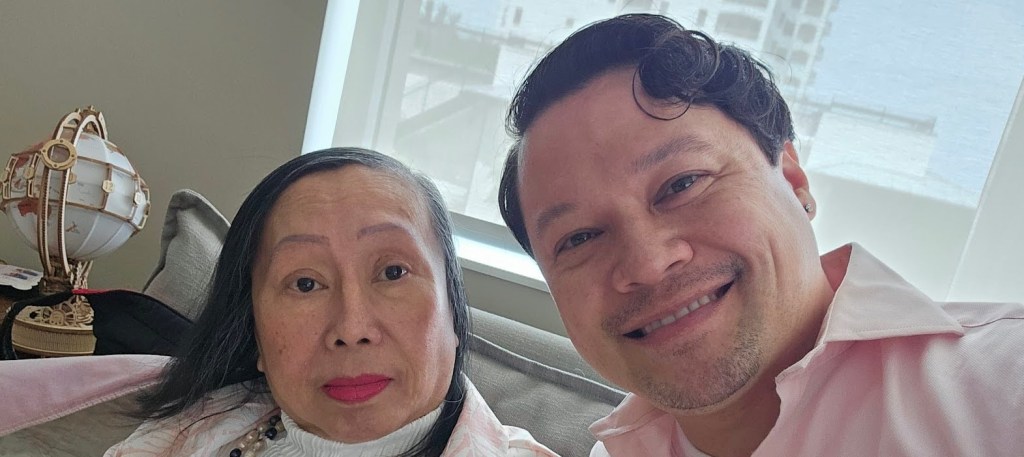
And when we go out, I dress my mother myself. This part is especially personal. My mother was once a beauty queen and cheerleading captain, always particular about her appearance — her makeup and hair perfectly styled, every detail chosen with elegance and pride. This was not vanity; it was her signature, a reflection of her confidence and personality. So now, when I fix her hair, put on her makeup, and paint her fingernails in her favorite bright colors of red or pink. I do it not just as a task, but as a way to honor her dignity. I try to make her look the way she would want herself to look — how she still sees herself. It is one of the most intimate acts of love I perform, a quiet ritual of respect.
Recently, she had a very lucid moment – one that I will carry for the rest of my life. She told me she remembered a conversation from when I was fifteen years old, when I promised her I would never leave her in her senior years, that I would always take care of her. She told me she was grateful that I kept my promise. I held her trembling hand and said, “Of course. It’s my honor. You are my mother, and I love you.” She looked at me gently and simply replied, “Bal-an ko,” which translates to I know, but even more deeply, means: I know this by your actions. Those two small words meant the world to me.
Some days feel like I am caring for teenage children – my parents still have wisdom, humor, and agency, but they depend on me for much of their everyday life. But caregiving is not just a list of tasks. It is deeply Filipino. It is bayanihan at the family level. It is kapwa lived out in daily acts. It is utang na loob — not debt, but gratitude and love returned.
My mother gave me life. She gave me her culture and language. She gave me confidence and strength. And now, in her final years, my purpose is simple – to make her feel safe, warm, and loved, just like I did as a child on that banig. These are precious memories I will always carry with me.
This is the cycle of life she taught me, and her ancestors taught her. And I am incredibly honored to be a part of it.
Jhoshua Ang Price is a Filipino American nonprofit strategist and community leader based in Jacksonville, Florida. He is dedicated to culturally grounded advocacy and serves on the boards of Jax Filipinos, the National AAPI Mental Health Association (NAAPIMHA), and FYLPRO, and is a founding member of Tayo.
 Aging in America News
Leave a comment