| More Solo Agers
| Harry Margolis
Reposted with permission from Risking Old Age in America on Substack
Most seniors who need assistance due to physical or cognitive decline are cared for by family members. According to the AARP, there are 63 million family caregivers in the United States, just under a quarter of all adults.
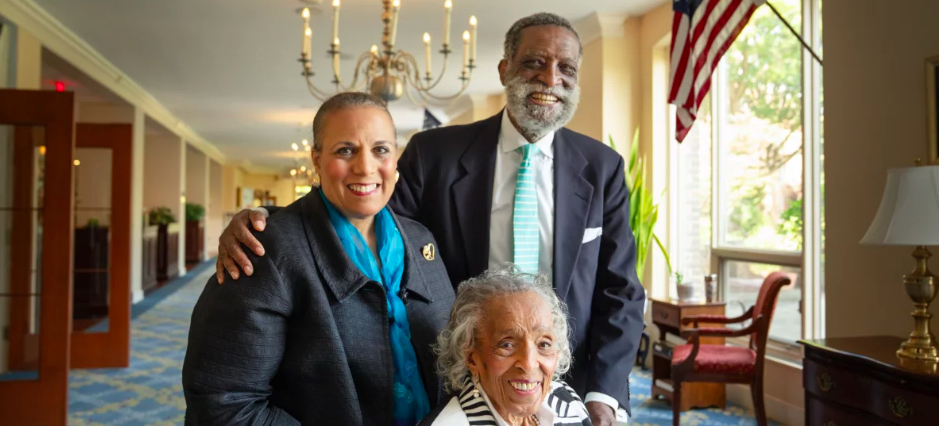
Four in ten family caregivers live with their relative receiving care, and another 35% live nearby. A recent National Public Radio broadcast features a Washington, D.C., couple, Maurice White, 75, and Renee DeVigne, 68, who are living with and caring for Mr. White’s mother, who is 104.

The prevalence of family caregiving raises the question of how the trend towards smaller families will affect the availability of assistance for older adults in the future. Mr. White and Ms. DeVigne are a prime example. They do not have children. Who will step in and care for them if and when they need assistance?
Smaller Families
I’ve seen this trend in my own life. When I was growing up in the 1960s, most of the families in our community seemed to have four children. Most of our friends having and raising children in the 1990s and 2000s had two children.
The birthrate per woman in the United States was 3.4 in 1955, dropping precipitously to 1.74 in 1976. It then rose a bit reaching 2.1 in 2006, falling during the Covid-19 pandemic to 1.6 in 2023, and rebounding to 1.8 in 2024.
The birthrate necessary to maintain a stable population is 2.1, and therefore these lower birthrates will yield a shrinking population unless immigration makes up the difference, which has been the case up until now. Without immigration, not only will there be a shortage of family caregivers, but there could be a shortage of workers overall and of caregivers in particular. The missing workers may be replaced by AI and robots (a story on The Daily describes the great strides Amazon is making in using robots in its warehouses), but I’m skeptical as to whether they can take the place of the human touch provided by caregivers.
More Old Folk
With fewer young people and more old folk, the percentage of the U.S. population made up of older adults is projected to grow dramatically, as shown on the following chart in the NPR article accompanying its broadcast.

While this chart covers the years from 2020 to 2060, the most significant period is from 2030 to 2050. The proportion of the population who are 65 and over is projected to grow only from 20.5% to 22% over those two decades (since all baby boomers will be at least 65 by 2030). In fact, the Census Bureau projects the proportion of 65- to 84-year-olds to decrease from 18% to 17% of the total population. At the same time, the percentage of the population 85 and over is expected to almost double from 2.5% in 2030 to 4.8% in 2050.
Sorry if the following gets too much into the weeds, but another problem I have with the NPR chart is that the absolute numbers make it look like the 65 and older population is growing at a faster rate than the 85 and over population. After all, the share of the overall population made up of those 65 and over will increase by 6 percentage points from 2020 to 2060 while that of those 85 and over will increase by just 3 percentage points. But if we look at rates of growth, all seniors will grow by 35%, and older seniors by 150%. And during the key years of 2030 to 2050, the corresponding rates of growth are 7% and 92%.
More Solo Agers
As I’ve been preaching, since seniors 85 and over are much more likely to need assistance than are younger seniors, the doubling of this group as a proportion of the population over a much shorter time span will place a huge strain on our already struggling long-term care system and on families caring for loved ones.
That’s assuming that there are family members to step in. With fewer people having children and those having children having fewer of them, there will be more “solo agers” without family to help out when needed. This circumstance will exacerbate the challenges our long-term care system is about to face.
In the 2050s, historians may well look at the 2020s as the time when America could have changed course in anticipation of predictable demographic shifts, but chose instead to make matters worse.
A longtime elder law attorney, Harry Margolis founded ElderLawAnswers.com, answers consumer estate planning questions at AskHarry.info, and hosts the podcast Risking Old Age in America.
 Aging in America News
Leave a comment