
| Ken Stern on Social Connection and Longevity
| In Healthy to 100: How Strong Social Ties Lead to Long Lives, longevity expert Ken Stern explores “the world’s healthiest countries”—Singapore, Japan, South Korea, Italy, and Spain. Here, we discuss how the book came about and what lessons can be drawn from international examples. This interview has been edited for length and clarity.
Let’s start with the story of the book and what you originally set out to do and then what you learned along the way.
The book really began with my podcast, Century Lives. It’s a documentary podcast, not an interview podcast. We do seasons around themes, and we go to the field and report. A few years ago, we did a season on outliers.
Meaning…?
Raj Chetty at Harvard has done a lot of work on the correlation between county-level income and life expectancy, and there’s a very close connection between the two, but there are outliers. These are places that were overperforming based upon where they should be in life expectancy and income. We identified a few and went to those places and reported on them.
What did you discover?
Everywhere we went, the story was kind of the same. It wasn’t about nutrition or exercise or access to health care. What really made them stand apart were the levels of social connection. And this was a very diverse group of places. We went to Presidio County, which is a poor county in Texas, right on the Mexican border. No American hospitals, no culture of exercise, a lot of obesity. And yet people there live, according to the data, a number of years longer than you might expect. We also went to Co-op City in the Bronx. We found this urban environment actually creates community and social connections, and connection supports longer, healthier lives. In Wayne County, Kentucky, it was really about a very thick level of volunteerism that created social connection.
How did you make the leap to having an international focus?
I was curious about how other countries do it. And why are they successful in the ways that we aren’t? That led me to finding and investigating countries that were outliers in their own way, that overperform in terms of healthy life expectancy . Social health was really the core of a community strategy. Sometimes government driven, sometimes more grassroots driven, but it was the core of helping people flourish in the second half of life. The second thing that jumped out at me was the importance of intergenerational relationships. Everywhere I went, the idea of bringing the generations together for the benefit of the young and the old was either explicitly or implicitly something these places were focused on.
Take Singapore, for example. How do they do it?
The housing redevelopment board owns 90% of the housing, so they actually make housing policy that intentionally brings the generations together. You can’t actually qualify if you’re single and under 35. They don’t let you qualify for your own apartment. Most of the places are done by lottery, but if you want to live close to your parents or your kids a floor away, an apartment away, they give you priority. They don’t build senior housing anymore, they build only intergenerational housing facilities. It’s just, it’s very much built into the DNA of how they organize their society.
And does that belief come from something religious? Is it more cultural?
It is partially the case that there’s a cultural bias to the importance of family to social stability, and that’s true in many of the cultures I went to. But they are also keenly interested in the research on intergenerational care.
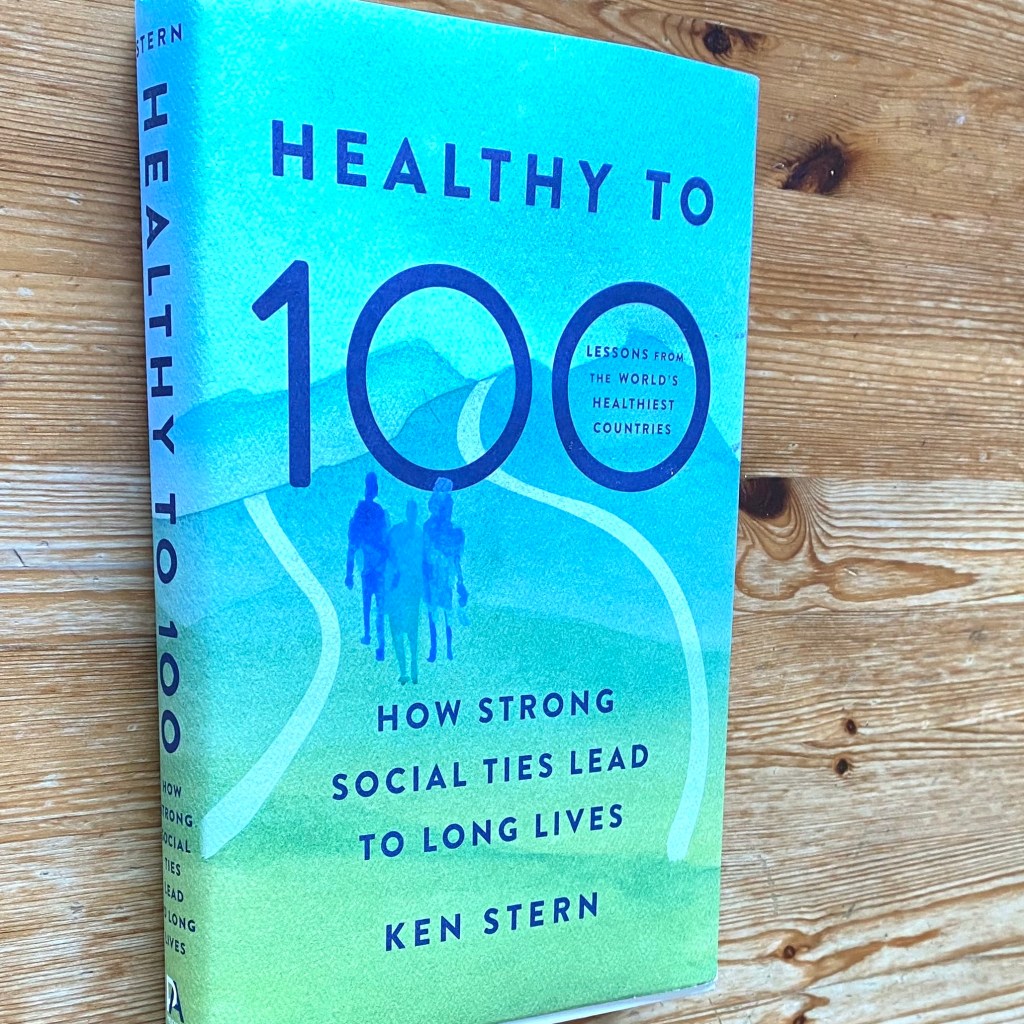
How does Healthy to 100 differ in approach from Dan Buettner’s Blue Zone books?
The Blue Zones focus on life in small, isolated, largely rural communities. That’s really not the way we live. I wanted to go to places that were like ours—crowded, urbanized, often anonymous ,people moving a lot, challenged by technology. I wanted to find out how, if we’re going to look for lessons from other places, we should look for lessons that are transferable, so I wanted to go to places that aren’t some idealized notion of often island life, because we don’t live that way. If we’re going to learn, we need lessons that are transferable to us.
What about structural issues? Things like policy, but not just policy.
I think this is more about culture and how we live our lives, less about government. This is one of those cases where politics is downstream of culture. The reason social connection in the country is on the decline is not because we’ve changed and become less friendly as individuals. It’s because the structures that brought us together have largely fallen apart. We need structures and new rules that would give people opportunities to come together. That’s an individual responsibility. You’ve got to get out of the house yourself, but ultimately we have to create mechanisms—what I call social health infrastructure—for people to flourish.

 Aging in America News
Leave a comment