
| Q & A with Alison Barkoff
| In this interview, Alison Barkoff, J.D., discusses federal and state policy successes and challenges. She is the Hirsh Health Law and Policy Associate professor and program director at The George Washington University Milken Institute School of Public Health in Washington, D.C. From January 2021 to October 2024, she led the Administration for Community Living (ACL) in the U.S. Department of Health and Human Services.
I understand you came from the disability care advocacy world originally.
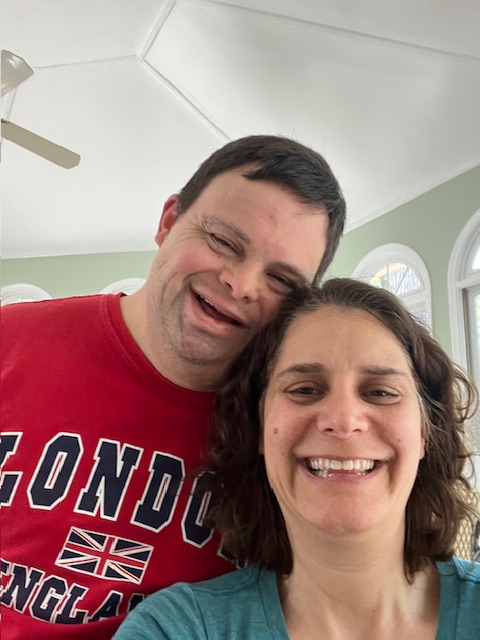
My personal background and interest in this work is that I am a sibling of a brother with Down syndrome. When Evan was born in the late 1970s, there was no such thing as home and community-based services (HCBS). Virtually everyone like Evan was in institutions, and our family was told to place Evan in an institution. My parents were part of that first generation who said, No, we’re not doing that, and whose activism allowed children and adults of all ages with disabilities to live in the community instead of institutions. This breakthrough was followed by the passage of the Americans with Disability Act in 1990, which in turn led me to become a disability rights lawyer.
How did you make the connection between disability care and care for older Americans?
I saw the shared interest and commonalities pretty early on, with the aging and disability communities working together around long-term services and supports. The largest disability population is older adults. Most older adults are people with disabilities. More than 50% of people 65 and older have a disability, whether it’s vision or hearing or mobility disabilities. They might not identify as people who have disabilities, but they actually are protected under disability rights laws.
Age-Friendly Public Health Podcast: The Intersections Between Aging and Disability Policy
Leveraging Disability Partnerships and Policies to Advance Age-friendly Ecosystems (American Society on Aging)
The advocacy goals overlap considerably.
Absolutely, and a lot of the disability rights tools really help meet the goals of the aging community.
ACL arose in 2012, during the Obama administration. What role did you play? And what impact has it had on collaboration across aging and disability?
President Obama launched a government-wide initiative on community living. As part of that, I was leading efforts in the Civil Rights division of the Department of Justice to enforce the rights of people with disabilities to live in the community. I worked closely with partners at the Department of Health and Human Services as they established ACL. It was not only an important milestone for elevating community living but also for bringing aging and disability advocates together. It spurred collaboration among ACL’s programs and grantees and spread to the broader aging and disability communities.
Do you feel like the advocacy community or communities are playing more defense during the second Trump administration than in the first one?
I wouldn’t characterize it that way. In the Obama years, we started building strong coalitions, so that, during the first Trump administration, we were already working really well together. Together we fought proposals to repeal the Affordable Care Act and cut Medicaid. I continue to be really proud of the collaboration that I’ve seen across aging and disability over the last eight months. You see that in the Medicaid fight, with aging and disability organizations co-signing letters together. The Hill visits happened together. There has been a focus on protecting home and community-based services. When you are in the foxholes together, you really build strong relationships. And those are stronger now than ever.
Can you point to successes that these alliances have helped to realize?
The Trump administration is doing a major reorganization at HHS and has said it will eliminate ACL as a separate agency. Initially they proposed to split up all of the aging and disability programs across multiple agencies and to eliminate 17 major disability and aging programs. People really came out and have been working together to advocate for those specific programs as well as the value of keeping ACL’s aging and disability programs together as a unit. And that advocacy made a difference. The administration backed off from eliminating many of those programs. And while it’s disappointing that they are proceeding with eliminating ACL as a separate agency, they are keeping aging and disability together and moving it to the Administration for Children and Families, where it will be called the Administration for Children, Families, and Communities. We’ve seen that we are stronger when we advocate together, whether it’s about long-term services and support or caregiving issues or accessibility or civil rights. In the states, I see so much collaboration on the advocacy side, as well as between local aging and disability programs on the ground.
What else is going on at the state level?
Many states are focusing on creating master plans on aging or multisector plans on aging, focusing on planning for all the things people need to age well. When I was at ACL, we put out a framework for a national plan on aging. We were intentional to talk about aging with and into disability, hoping states would follow suit as they put together their own plans. And then, from the disability side, we had a Bridging Aging and Disability project that gave funding for collaboration at the state level. California has been groundbreaking in doing this and making sure disability has been fully at the planning table. In Connecticut, disability and aging are working together as they’re starting to put their plan out.
During the pandemic, the aging and disability communities came together to try to help people who were most at risk during the pandemic. What was that experience like for you?
You have to remember, older adults and people with disabilities were at highest risk of death and severe sickness from COVID, but they faced a lot of barriers to getting vaccines. Many were unable to leave their homes or had transportation barriers. Vaccination sites were not fully accessible. It was too hard to sign up on websites. Amazing partnerships were created at the ground level to address those barriers, and that has really blossomed into other types of relationships. We saw those bonds endure through other disasters, including the wildfires in Hawaii. I am hopeful that some of the infrastructure we put in place over the last several years can continue.
We’re going to need that infrastructure for the future.
We have 11,000 people turning 65 every single day. We have people with disabilities who are living longer. I think it is becoming incredibly visible. COVID shone a light on how a fragile, fractured system compels families to come up with their own care supports and the significant impacts that has on our economy. The American Rescue Plan Act (ARPA) had the most significant increase in funding for community-based services since the Affordable Care Act and was the result of strong, coordinated advocacy by the disability and aging communities.
Could you describe your vision for 20 years from now?
I see amazing cross-lifespan momentum. We have no choice. There’s a saying about the politically impossible becoming the politically inevitable. We absolutely need a true long-term services and support system. And it cannot just be funded through a program that people have to spend down to become eligible like Medicaid. That creates every misaligned incentive in the world, with 700,000 people sitting on waiting lists for home- and community-based services.
What about Medicaid?
Medicaid is an imperfect program, and it is all we have. At this moment, the federal fight has become a 50-state fight. And we’re going to have to fight state-by-state to preserve and prevent cuts as much as possible to home- and community-based services.
What could it look like in the future?
A lot of us are thinking not only about how to change Medicaid but also thinking beyond Medicaid. How do we try to build more benefits – particularly home care – into Medicare? (Most people mistakenly believe that Medicare provides long-term services and supports; it doesn’t.) Could we create a public long-term care program? Washington State has started us down this road with their WA Cares Fund. Can we do that while enhancing the private long-term care insurance market? The Well-Being Insurance for Seniors to be at Home (WISH) Act offers long-term care solutions worth considering. Obviously I don’t think any of these ideas are moving in the immediate term, but this is a really important time to be looking across all these ideas and to come up with a holistic view of a long-term care system.
‘System’ is the key word.
Yes! The coordination and collaboration across aging and disability is going to become even more important in the future.

 Aging in America News
Leave a comment