
| But the WHO Nearly Declared That It is
| Paul Kleyman |
The very notion of a vigorous, active and productive old age across populations is so new historically that the presumption of decline will likely take many decades to overcome.
A fascinating podcast by The Atlantic (May 5, 2025), explains how a team of Canadian experts dissuaded the World Health Organization (WHO) from listing aging as a clinical disorder.
In “How to Define Old Age,” Atlantic staff writer Yasmin Tayag recounts her interview with Kiran Rabheru, MD, a professor of psychiatry at the University of Ottawa and a geriatric psychiatrist who found himself at the center of a medical debate. In 2021 a division at WHO, according to the podcast transcript, “wanted to officially designate ‘old age’ as a disease, but with more than 40 years of work with aging populations, Rabheru saw this as another example of ageism that needed to be challenged.”
Rabheru told Tayag, “It came to our attention that the WHO was updating the International Classification of Diseases, the ICD. And part of the changes that they were proposing was to include ‘old age’ as a disease.”
He added, “Look, the WHO is highly respectable. but it’s an unconscious bias. And this is an example of ageism within WHO. Now, in March of 2021, the same organization put out the global report on ageism. To combat ageism.”
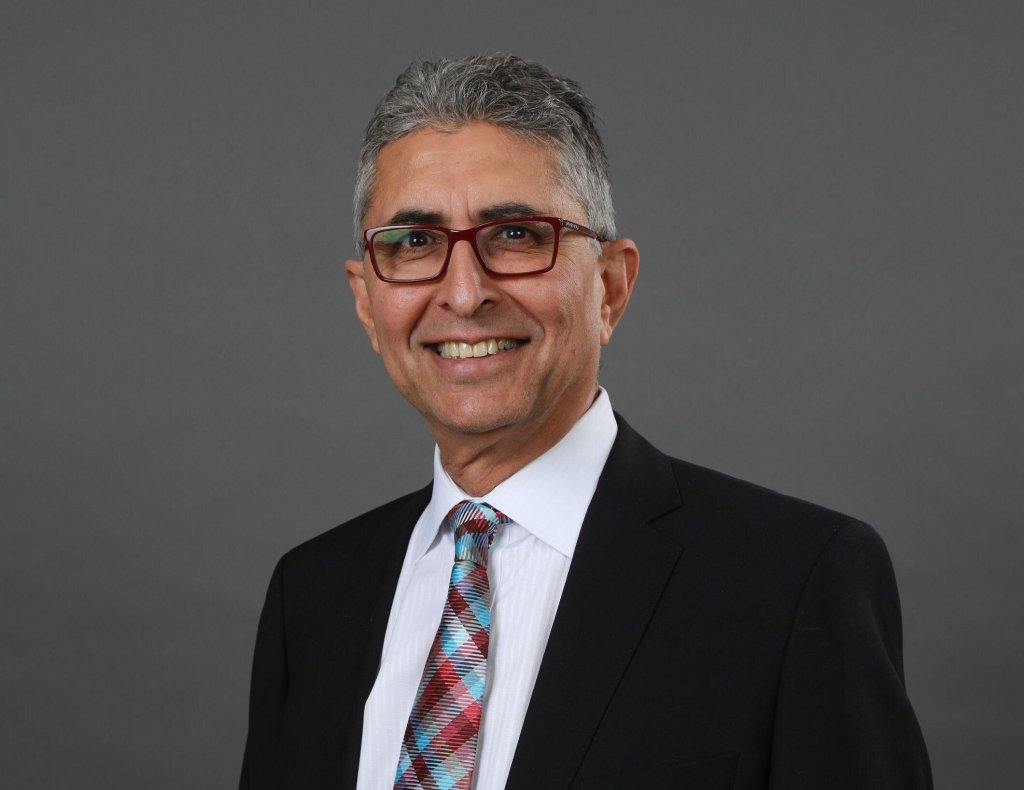
Rabheru stressed, “Our team and the people that I work with immediately thought: Aging is a privilege; that’s not the disease. . . . Having a diagnosis of ‘old age’ would automatically just lead people to put them into that category, that ‘This person’s just old’—and they move on to something that’s easier to deal with.”
Remarkably, according to The Atlantic, Rabheru recounted how he and his colleagues met with officials at WHO and “went through it in a systematic, scientific way. And we explained we understand [that] they want to go after the biological aspects of aging—which absolutely we need to do! . . . But to call old age a disease is not going to play well in society.”
He continued, “They came back to us a few weeks later saying they’ve . . . decided to change it. We were very happily shocked that they rescinded it. And that was the right thing to do. We were very pleased. Aging is universal and should not be pathologized. And it’s time to reframe aging in a more positive way.”
Most crucially, Rabheru said, “It’s not the age. . . . If you have a car accident and you can’t walk tomorrow because of a spinal-cord injury, you would have the same level of intrinsic capacity as someone who’s had a stroke at the age of 80. So the number, chronologically. . . , is a risk factor, of course. Every organ ages over time. . . , but it’s not the main driver of functional capacity.”
The chummy podcast chat between Tayag and her producer, Natalie Brennan, also touches on scientific research on aging, potential issues regarding its costs and professional conflicts, issues around menopause, their grandparents and parents, and more.
An especially significant moment, though, comes toward the end, when Tayag asked her colleague, “Have you heard of the concept of healthspan?” Brennan replied, “I have not.”
Expending human healthspan, not merely our life-extension, is the prime goal, as gerontologists have often put it, to add more life to our years, not only years to our life. For over four decades, the idea has been one of the foundational concepts in aging research.
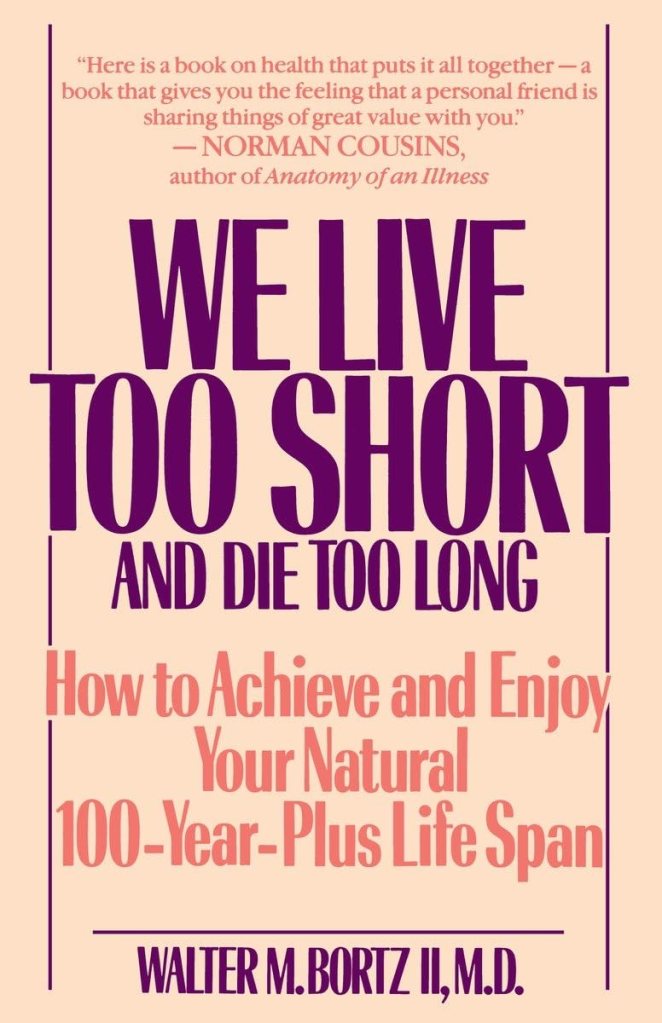
Hope eternally wishes to collapse any period of debility as close as possible toward one’s inevitable demise. As my late friend, Stanford University geriatrician Walter Bortz II, titled one of his books, We Live Too Short and Die Too Long. I last encountered him at gerontology conference shortly before his 90th birthday—which he planned to celebrate by running another marathon. He died at 93, in 2023.
Still, Dr. Bortz would not have expected maximal athleticism as the healthspan standard for late life. Look around you at elders whom you know or see in your community. Canes and wheelchairs won’t disappear, but today one sees (or uses) them in taking part in public settings where most were invisible only a few decades ago.
Medical miracles, physical or emotional therapies and technological breakthroughs are enabling more and more people to engage with the worlds around us. (My new Macbook keeps pestering me to activate its “accessibility” features to compensate for vision and hearing impairments.) Add exercise, a healthful diet, and a dollop of joy for good measure.
Paul Kleyman is National Coordinator of the Journalists Network on Generations (JNG), which he co-founded in 1993. He edits its e-newsletter, Generations Beat Online (GBONews.org).

 Aging in America News
Leave a comment