Q & A with Documentary Director Neil Steinberg
The new PBS documentary Aging in America: Survive or Thrive celebrates the enduring vision of gerontologist Robert N. Butler (1927-2010) and his Pulitzer-winning book Why Survive? Being Old in America (1975). Narrated by Martin Sheen, the documentary also underscores the resilience of today’s seniors. (This website, while similarly named, is unaffiliated with the documentary.) We spoke to director Neil Steinberg about the project. This interview has been edited for length and clarity.
Was this a concept you brought to PBS or vice versa?
I brought it to PBS, but the origin goes back the 1980s with a video series called Caring for an Aging Society, which was hosted by Dr. Robert Butler and AgeWave CEO and founder Ken Dychtwald. During the making of that series I also met Terry Fulmer, who is currently the president of the John A. Hartford Foundation. When Terry and I reconnected a couple of years ago, we discussed the idea of making a documentary. She suggested the idea of honoring Dr. Butler and celebrating the fiftieth anniversary of his landmark book. The John A. Hartford Foundation became the primary funder for our documentary along with additional support from the American Society on Aging, The SCAN Foundation, and the Health Foundation for Western and Central New York. The focus of our documentary became how are we doing 50 years after the publication of Dr. Butler’s book.
And what’s the verdict?
It’s clearly a mixed report card. In some ways, ageism is better than it was 50 years ago. If you turn on the television or go to movies, seeing a mature 60-plus leading man or woman is not as unusual as it was back 50 years ago. So the media has gotten a bit more sensitive, but the flipside of that is all the economic insecurity. Older people are the fastest growing segment of the homeless population.
Aging is easier for some Americans than others.
Aging for some is absolutely terrific. For others, it is really a monumental challenge. One statistic that isn’t in the film that I thought was absolutely remarkable was this: the wealthiest segment of our population is women over 65, and the poorest segment of our population is women over 65.
Which of the older adults you profiled has stayed with you the most?
One was Connie.. She had this really horrendous childhood, but she worked her way through it. She became a nurse, but then she got cancer and was devastated not only physically, but financially. At the age of 60, she became homeless. And then there was Brenda. She got up at 5:30 in the morning and took care of her farm and worked a part-time job and took care of her husband with Alzheimer’s disease. These were the two of the strongest, most resilient people I’ve ever encountered. They are far from helpless. They just need some help.
How did Martin Sheen get involved with the project?
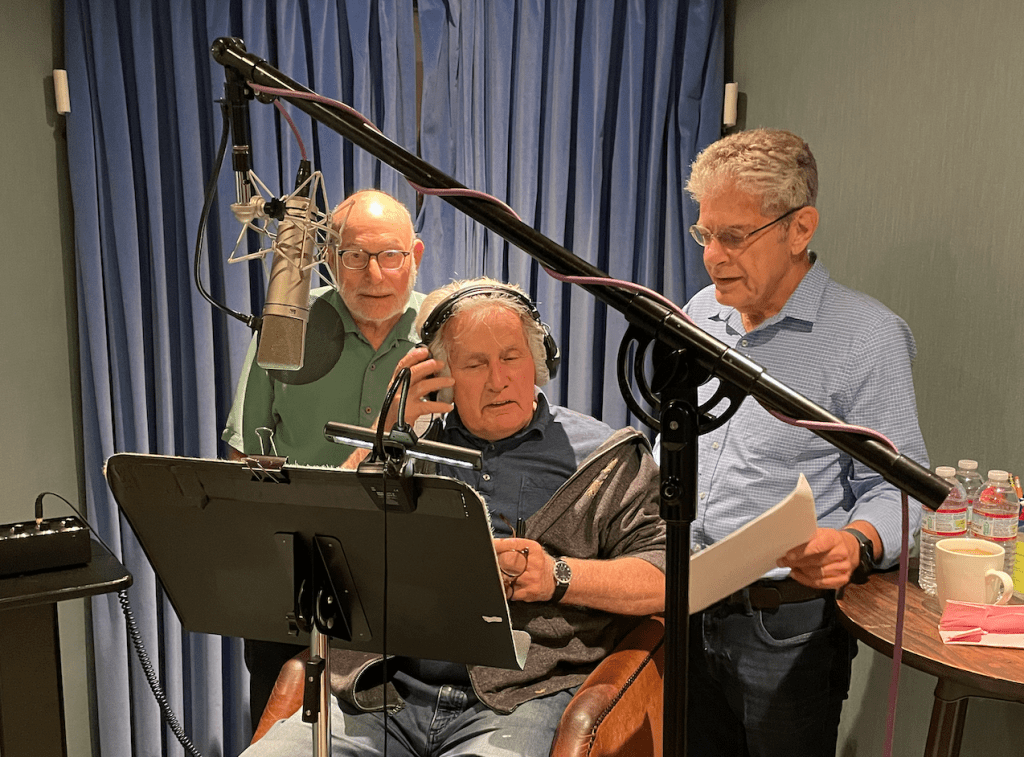
We were really grateful and appreciative, given his stature as an actor and an American cultural icon. We couldn’t have asked for a better voice. He embodies the wisdom and warmth that we wanted, and being an older adult himself, he was quick to jump on it. We sent him a rough cut, and he looked at it and agreed immediately, even though he was quite busy at the time.
Why does the documentary start with data on how much longer humans are living these days?
Longevity is the predicate for everything that follows. It’s startling to realize that in the last hundred years, there’s been a greater increase in the lifespan than in the previous 5,000 years. Based on Dr. Butler’s book, we wanted to look at society’s role was and what our institutions need to do and what our public policy needs to do to make lives better for older adults.
It’s not a polemical documentary, but viewers can keep it in mind when they hear about slashing Medicaid and things like that.
We shot it before the current administration took office. I’m not sure how that would’ve changed our story, but I’m sure Dr. Butler would be disturbed about a lot of the events that are happening today.
Speaking of threats, what does it mean to you for the documentary to be shown on PBS?
PBS was the perfect home for this project and partly because of their demographic and partly for what PBS stands for. And I was really proud to be associated with PBS. I think they do amazing work, and we always knew we wanted to take it to there. PBS in our society really is a symbol of education, information, and culture. I’m not sure where documentaries like ours could be seen if there was no PBS.
 Aging in America News
Leave a comment