Q & A with “Caregiving” Director Chris Durrance
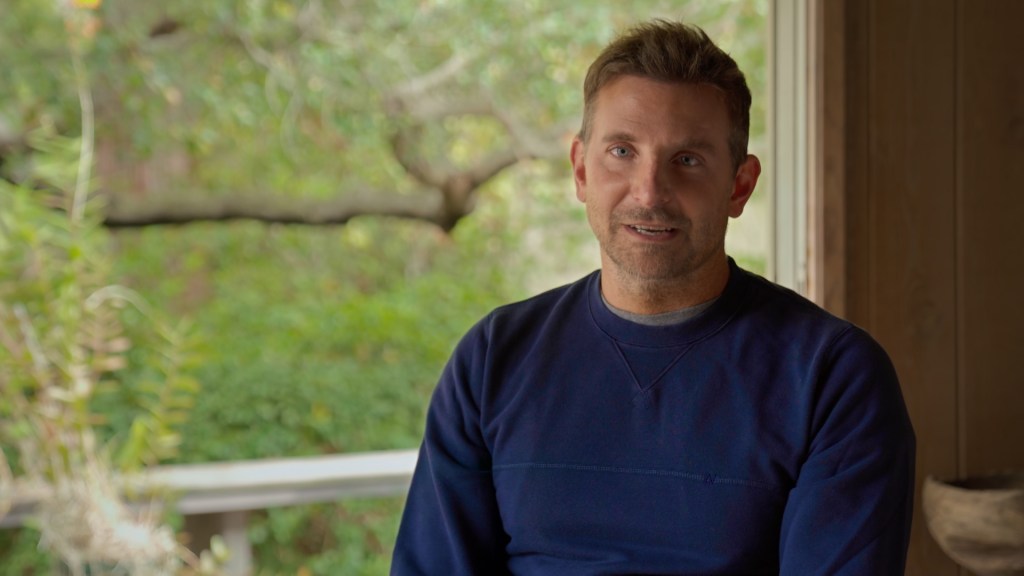
“These are heroic people,” declares actor and filmmaker Bradley Cooper. He’s not talking about action heroes or superhumans. He’s talking about the largely invisible workforce that takes care of seniors and people with disabilities. Cooper serves as executive producer of the new PBS documentary Caregiving and appears in it with his father, who was undergoing treatment for lung cancer. Streaming now on PBS, the documentary will be broadcast on June 24 at 9pm eastern time. Aging in America News spoke to director Chris Durrance, whose previous credits include The Gene: An Intimate History and Cancer: The Emperor of All Maladies.
How did you come to this topic?
We drew a couple of lessons from the films that we’ve made on cancer and on genetics, which was largely on rare genetic diseases. And there was this huge untold story in the room with a patient and with a physician or a researcher or a scientist. There was generally this third person in the room, the caregiver. It could be a paid caregiver, it could be a family member, but the care of the person extended far beyond treatment. It was 24/7. It was all consuming. It was largely invisible to the outside world. And the more we thought about it, we realized that it was this huge untold story.
How did Bradley Cooper get involved?
His father had lung cancer, and he became heavily involved in the care and saw, even for someone wealthy as well connected as he was, how challenging it was. And so he set up a foundation to raise awareness about that and wanted to get involved in storytelling around this issue. And so it’s almost like there’s this permission that comes from that first story, because it is everywhere, but people feel so isolated until they get that permission.
“For generations, our society has dismissed care as an issue without economic significance beyond the personal or familial spheres. Our public and corporate policies and our society’s devaluing of care has made this fundamental act of love and humanity a challenge that families are expected to figure out on their own. As a society we have accepted this as normal for too long. By placing the responsibility for caring for our loved ones on the individual, our society has overrelied on unpaid and underpaid care to our own detriment.
“We are thrilled to have supported the production of Caregiving, as the documentary has the power to advance the sea change happening right now in how the public and media perceive the essential role of care in our lives. We hope it will inspire funders and policymakers to invest in the care supports families urgently need across the lifecycle.”
—Anna Wadia, executive director, The CARE Fund
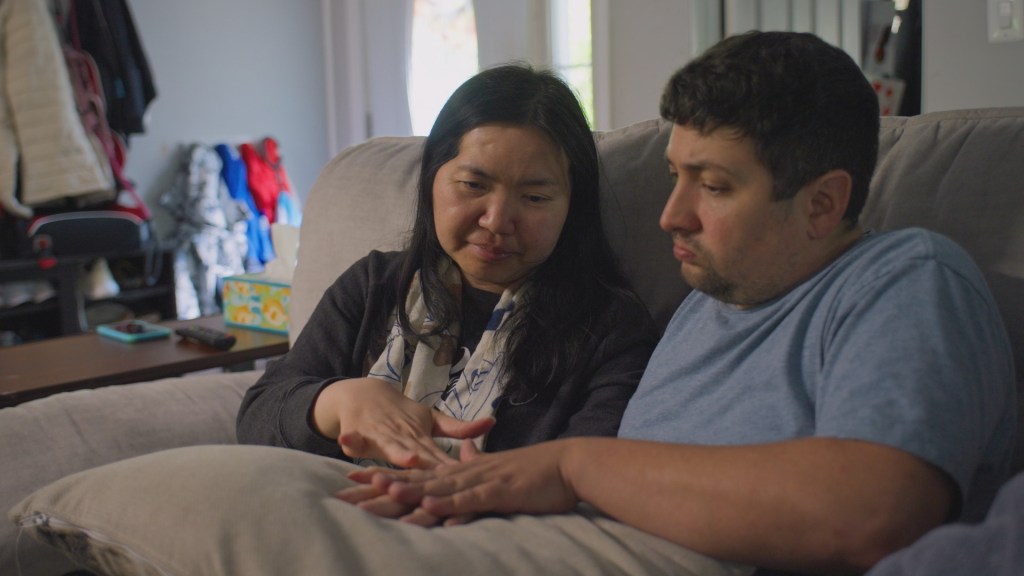
And it makes a powerful contrast with the story of Matt Cauli, “the Dedicated Caregiver” who has told his story on social media. Matt isn’t rich and famous, and his wife was stricken before her time.
Between the two stories, you see that it really does happen to everybody. Every family situation is different. For me, the most important thing was to convey the totality of the lived experience. So you see the experience of paid caregiving; you see the experience of family caregiving; you see rich and poor; you see young and old; you see different genders doing care. You see different people of different ethnic backgrounds doing care. It’s the quintessential universal story. It will come to everyone. There are ten thousand baby boomers retiring every day. Every family is either impacted by this or is going to be.
It’s surprising to see teenagers taking on caregiving duties.
If we think of caregivers as a population that is largely invisible to the world outside, it’s even more so in this case. And isolating. Many of their peers just have no concept of what they are going through. In Rhode Island public schools, they ask students if they’re involved in caregiving, and they found out that 40% of their student body was involved in caregiving. And that means they’re getting there late. They’re leaving early. They may not be able to do homework assignments. They may be tired in class. So it’s compromising their ability to graduate, and they’re being stigmatized as failing students, as inadequate students when the reality is, if you looked at the totality of their life, there are these model students. Model citizens.
In addition to telling contemporary stories, “Caregiving” relays the historical and political context. What did you hope to achieve with that background?
I feel strongly it’s a history that we should know collectively, as a country, better than we do. It’s a story of a push and pull between collective, community-driven efforts (be it at the federal or state level) and the individual pioneer spirit that America has had since its modern birth.
What’s next for this project?
Finishing the film, putting it out on TV or in the theaters, is often the end of the journey. But to us, and particularly for this project, it’s the beginning of a journey. It’s the beginning of bringing people together. It’s the beginning of a process of sharing the story and sparking these conversations about caregiving and ideas about what to do and how to support communities of like-minded people. We’re all in this together. It’s the quintessential universal story.
 Aging in America News
Leave a comment