Mark Swartz
The Trump administration’s chainsaw hasn’t spared dementia research. Dr. Kendall Van Keuren-Jensen, incoming director of the NIH’s Center for Alzheimer’s and Related Dementias, was fired before she even started. Proposed funding restrictions would result in an annual loss of more than $150 million at University of California San Diego alone.
According to Dr. Jim Brewer, professor and chair of UCSD’s Department of Neurosciences and director of the Shiley-Marcos Alzheimer’s Disease Research Center,
“To pull funding at this point would be to absolutely cut the knees out. We have such tremendous momentum in making major impacts on this disease—one that experts say will bankrupt America’s health care system if we don’t address it. If you’re on the cusp of curing or treating an illness with that degree of economic impact, you don’t cut funding to that program.”
If and when we eventually rebuild from the Trump-Musk chainsaw massacre, the perspective of people with dementia and those caring for them should be taken into consideration.

It isn’t a question of cure versus care but rather a matter of balance.
LISTEN: Is it time to rethink how we care for dementia patients? (WBUR On Point)
“Sure, most people in our surveys would love for there to be a cure,” says Davina Porock, professor, University of Buffalo School of Nursing, “but in the meantime they all have this disease and they need help.” Her survey finds a preference for prioritizing caregiving support and resources for long-term care.”
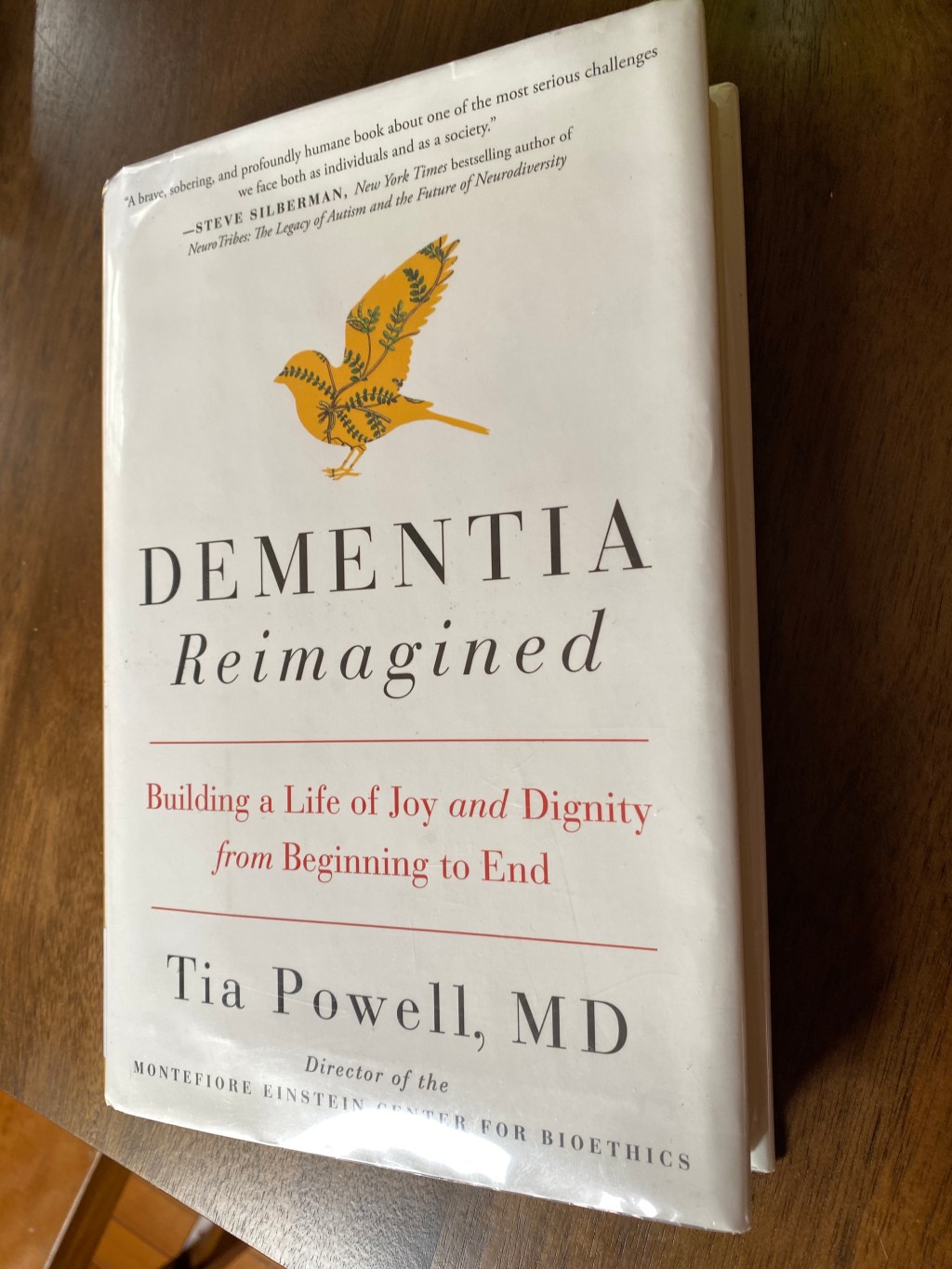
In a 2019 NextAvenue interview, Tia Powell, MD, Director of the Montefiore Einstein Center for Bioethics, points out:
“If we find a cure, it’s not going to be in time for the baby boomer generation. We will have millions and millions of people who need care. And although I think there are good people working on that, there has been pretty modest funding for thinking about what would good care look like? How can we pay for that? How can we make it accessible to people all across the country? What are the things that people with dementia and their caregivers really say they need and want?”
Dr. Powell’s book Dementia Reimagined: Building a Life of Joy and Dignity from Beginning to End expands on this theme with a pointed metaphor about gender stereotypes. Medicine, she writes, “sees itself as manly, offering heroic cures. But a great deal of what medicine offers patients is care — incremental, accommodating, feminine (if you stick with the outmoded metaphor). Yet medicine is too embarrassed to admit this. Care seems soft and unscientific; we’d prefer to hand out swashbuckling cure.”
The more than $3 billion the U.S. has spent annually (until now) on finding an Alzheimer’s cure might be a sound investment, but if we get a redo, we would do well to recalculate the benefits and costs of the “incremental, accommodating” strategy of care.
Mark Swartz founded Aging in America News and is a frequent contributor to Early Learning Nation.
 Aging in America News
Leave a comment